Filing Season Opens and So Does Scam Season: The Approaches Aimed at Small Shops
Small businesses make good targets in March. There is money moving, unfamiliar paperwork, and one person doing the books between jobs with a phone in hand.
| Author | Wesley Tarbox |
|---|---|
| Section | Innovation |
| Published | |
| Length | 1,229 words · 5 min |
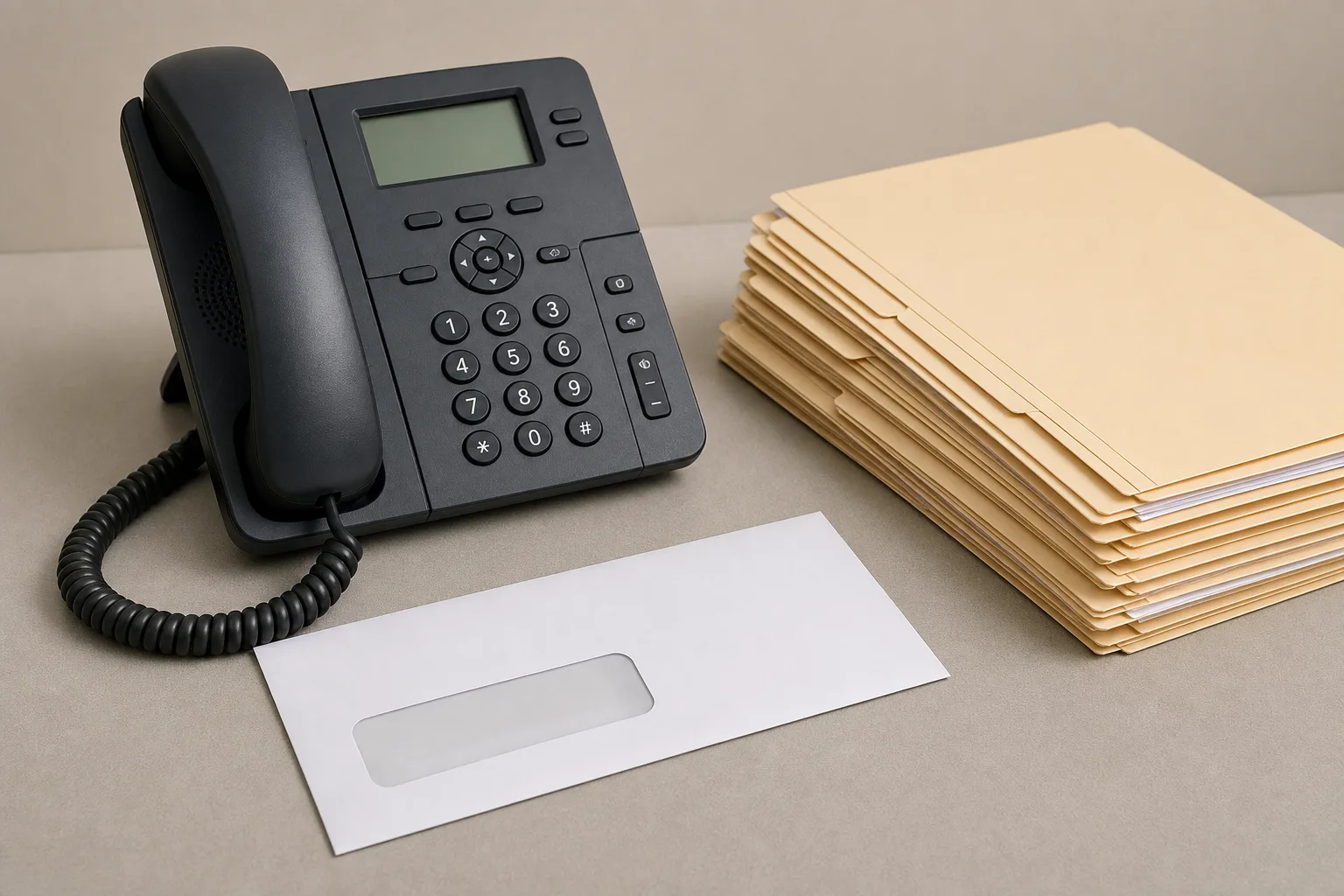
Ask anybody who has run a small trade business for a decade what March brings besides paperwork, and a fair number will describe a phone call. The reason small shops attract this attention in filing season is not that owners are careless. It is that the conditions are unusually favorable: real money is moving, the paperwork is unfamiliar and only handled once a year, deadlines are genuine, and the person responsible is often doing the books in a truck between jobs with a phone in one hand. Every approach that follows exploits some combination of those four things, and every one of them collapses against a single office habit.
The Call That Says You Owe and Must Pay Today
The oldest version and still the most effective, because it works on adrenaline rather than credulity. A caller states an amount owed, mentions a warrant or a license suspension, and requires payment immediately by a method that cannot be reversed: a gift card, a wire, a payment app, a prepaid debit card. Real tax collection does not begin with a phone call, does not demand a specific irreversible payment method, and does not threaten arrest on a first contact. The Internal Revenue Service initiates contact about a balance by mail, and that single fact defeats the whole approach, because any caller who cannot be verified against a letter you are holding can simply be hung up on without risk.
The variant worth naming separately arrives in the name of a state agency or a licensing board rather than a federal one, and it works on people who have already learned to distrust the federal version. A caller says a contractor registration is about to lapse, or that a sales tax filing was rejected, and offers to take payment over the phone to keep the business trading. The same rule disposes of it. Hang up, find the agency's number independently rather than using the one offered, and call back. An agency with a genuine issue will still have it in twenty minutes.
The Email Asking for Everyone's Payroll Forms
This one targets the office rather than the owner and it is the most damaging of the group. A message appearing to come from the owner, often from a lookalike address and often on a Friday afternoon, asks whoever handles payroll to send copies of every employee wage statement, quickly and without much explanation. The data is then used to file fraudulent returns in those employees' names. What makes it work is authority combined with urgency, and what defeats it is a rule that costs nothing: no payroll or banking data leaves the business on the strength of an email, ever, without a voice confirmation on a number already known.
Two details make the rule stick in practice. Say it out loud to whoever handles the books, including a spouse or a part-time bookkeeper, and say it as permission rather than as a warning, because the reason these succeed is that an employee does not feel able to question an instruction that appears to come from the owner. And extend it to the reverse direction, since the same technique is used to change the bank details on a supplier's invoice. A business that verifies by voice before moving data or money has closed the two most expensive doors in the building.
The Preparer Who Promises a Number Before Seeing the Documents
Not every problem in March is a stranger. A preparer who quotes a refund figure before looking at your records, who charges a percentage of the refund rather than a fee for the work, who asks you to sign a blank or incomplete return, or who directs the refund to an account that is not yours, is describing a business model rather than making a mistake. Anyone paid to prepare a return must sign it and include their preparer identification number, and a preparer who declines to do either has told you something important. The owner remains responsible for what is on the return regardless of who typed it, which is the part that makes this expensive rather than merely annoying.
The seasonal storefront version deserves particular care in a trade business, because the deductions available to a contractor are exactly the ones an aggressive preparer will inflate. A preparer who asks no questions about mileage records, who suggests a home office figure without seeing the house, or who produces a refund noticeably larger than last year's on similar income, is building a return that will not survive examination two years later when the preparer's telephone number no longer works. Ask how long they have been at that address and whether they are open in July.
The Refund That Arrives and Then Has to Go Back
A more elaborate version starts with stolen client data, files a return in the real taxpayer's name, and directs a legitimate refund into the taxpayer's own account. A call follows, from somebody claiming to be from a collection agency or the tax authority, explaining that the deposit was made in error and instructing you to forward it elsewhere. The money is genuine, which is what makes the story plausible. The correct response to an unexpected refund is never to move it on somebody's instruction, but to leave it in place and contact your preparer and your bank, since a return filed in your name without your knowledge is a serious matter that a wire transfer will not fix.
Business Identity, and the Text Message Version
Businesses have identities that can be stolen as thoroughly as individuals do. An employer identification number, a state registration and a certificate of insurance are enough for somebody to open trade credit, order materials, or bid work in a company's name, and the first sign is often a supplier calling about an unpaid account nobody recognizes. Meanwhile the text message version of the refund scam has largely replaced the email one, arriving as a short note about a pending refund with a link to a page that imitates a familiar login. The Federal Trade Commission collects reports of both, and the reason to file one even when nothing was lost is that enforcement against operations running these at scale is built from patterns across many reports rather than from any single incident.
The Habits That Cover Almost All of It
Four rules handle the entire list and none of them requires any expertise. Nobody who calls you is verified; call back on a number you looked up yourself. No payroll data, banking detail or credential leaves the business on the strength of a message, whoever it appears to come from. Any preparer signs the return and gives you a copy before you sign anything. And any unexpected money is left where it is until somebody you already trust has looked at it.
Written down and taped inside a cabinet door, those four sentences protect a small business better than any product sold for the purpose. The people running these approaches are not defeating sophisticated defenses; they are relying on a busy person answering a phone between jobs and reacting the way anybody would react to a deadline and a threat. A shop where everybody knows the rules in advance has already made the March phone call a nuisance rather than an event, which is all it ever needed to be.
About the author
Wesley writes about timing, and why the same job costs differently in March.