Thinking About a CDL? What the Federal Training Rule Added to the Time and the Bill
A commercial license used to be a permit, a rented truck and a test date. Here is what the route costs in weeks and dollars now, and where your state changes the arithmetic.
| Author | Junko Halloran |
|---|---|
| Section | Education |
| Published | |
| Length | 1,123 words · 5 min |
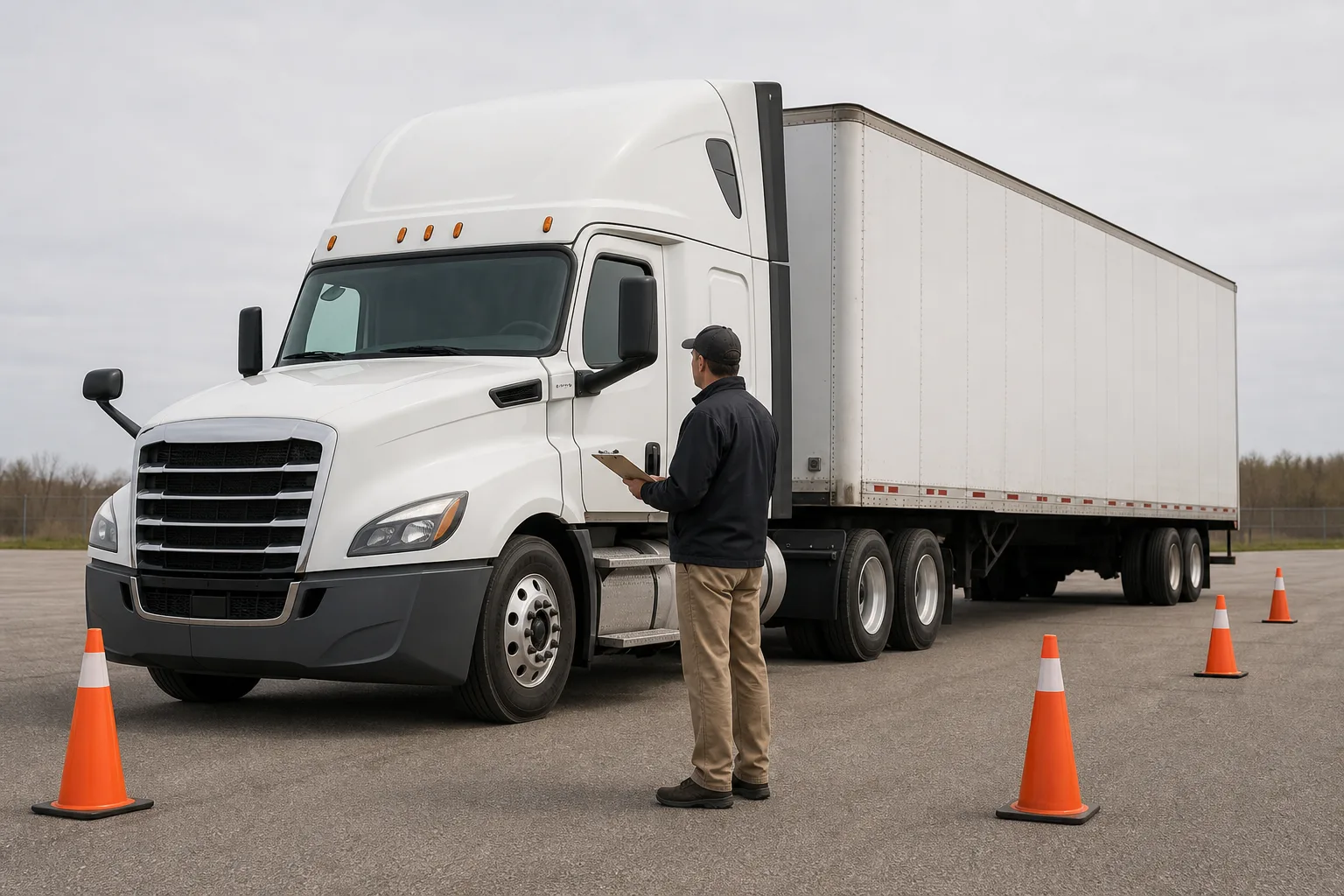
A man who got his Class A in 2014 and a man getting it this year are not doing the same thing, and the difference is not tuition inflation. In 2014, in most states, a person could study the manual, pass a written test, hold a commercial learner's permit for the required minimum, practice in a borrowed or rented truck with a qualified driver in the passenger seat, and show up for a skills test. Training was optional. Some employers wanted it, some did not, and a determined person with access to equipment could finish for the cost of fees and fuel. That path is closed. Since February 2022, entry-level driver training has been a federal requirement, and the provider has to be listed on a federal registry before the state will let you take the test. The Federal Motor Carrier Safety Administration, part of the Department of Transportation, oversees that registry and the training standard behind it.
That single change reorganizes the whole decision. It converts an optional expense into a gate, and it moves the question from "can I pass the test" to "which listed provider, at what price, on what schedule."
What the rule actually added, and what it did not
Entry-level driver training applies to anyone getting a Class A or Class B for the first time, upgrading from B to A, or adding a passenger, school bus, or hazardous materials endorsement. It has two parts. Theory is classroom or online instruction across a defined curriculum, and it has a required passing score. Behind-the-wheel is range and public-road time with an instructor, and there is no federal minimum number of hours attached to it. The provider certifies that you demonstrated proficiency, then reports it to the registry. Your state licensing agency checks the registry before scheduling the skills test.
What the rule did not add is a nationwide hour count or a nationwide price. Providers set both. That is why two schools forty miles apart can quote programs of very different lengths and both be fully compliant. It is also why the honest answer to "what does a CDL cost now" is a method rather than a figure. Anyone who quotes you a single national number is guessing.
The line items that are not tuition
Tuition is the largest number and the one everybody compares. It is not the only one, and the smaller items are the ones that stall people mid-process, because they arrive at the worst moments.
| Item | Where the number comes from |
|---|---|
| Commercial learner's permit and license fees | Your state licensing agency fee schedule, published online |
| DOT physical and medical examiner's certificate | A clinic on the National Registry of Certified Medical Examiners; call two and compare |
| Endorsement knowledge tests | State fee schedule, per test |
| Hazmat background check and fingerprinting | TSA fee, fixed nationally, plus travel to an enrollment center |
| Skills test fee, and any retest fee | State agency or third-party examiner, quoted separately |
| Truck rental for the skills test, if the school does not include it | Written quote from the school; ask whether it covers a retest |
| Drug screen and clearinghouse registration | Employer or school; registration itself is free |
| Income not earned during training weeks | Your own hourly rate times the hours you will not work |
That last row is usually the biggest number after tuition, and it is the one people leave out. A full-time program that runs four weeks, Monday through Friday, costs a person earning $22 an hour on a forty-hour week roughly $3,520 in wages not received. Whether that is a real cost depends on whether you had those hours to give up. Run the multiplication before you decide between a four-week day program and a ten-week evening program, because the cheaper tuition is not always the cheaper route.
Where your state changes the math
Federal law sets a floor of fourteen days between issuing the commercial learner's permit and taking the skills test. States can be slower in practice, and many are, not by rule but by calendar. Test appointment availability is a local variable. In some states you can book a skills test through a third-party examiner within a week or two; in others the state administers all tests at a handful of sites and the wait runs long enough that schools plan their cohorts around it. Ask two questions of any provider: how far out are test dates right now, and who administers the test.
Other state-level differences worth pricing before you enroll:
- Intrastate versus interstate age rules. At eighteen you can generally drive commercially within your own state; interstate work starts at twenty-one. That changes which jobs your license reaches on day one.
- Where the test must be taken. Some states require testing in state, or add steps for out-of-state applicants, which matters if the nearest listed school is across a line.
- Workforce funding. State and local workforce boards, community colleges, and county programs fund commercial driver training in some places and not others. The office to ask is your local American Job Center. This is the single item most likely to change your total, and it is entirely local.
- Retest rules. The number of attempts allowed, and any waiting period between them, is set at the state level.
The contract clause that makes rushing expensive
Company-sponsored training solves the tuition problem by having a carrier pay it, and for a lot of people that is a sound trade. The cost sits in the commitment term. You agree to drive for that carrier for a set period, often measured in months, and if you leave early you owe a prorated balance. The document will state the total, the proration schedule, and whether the debt is reported to a collection agency or deducted from a final paycheck.
Read the proration schedule specifically. A contract that forgives in even monthly increments behaves very differently from one that forgives nothing for the first six months. Ask for the pay structure in writing alongside it: cents per mile, expected weekly miles during the first ninety days, and how home time is scheduled. A commitment you can meet comfortably is cheap. The way to find out which one you have is to read it in a quiet room, not in a hiring office, and to take the extra week that reading requires.
Ten years ago the fast route and the thorough route reached the same license, and the fast route was often the rational choice. The registry requirement changed that, and it changed it in a way that rewards the applicant who prices the whole path first: fees, physical, testing, foregone wages, contract term, and the local test calendar. Get those seven numbers on one page and the decision stops being a leap.
About the author
Junko covers what work costs and why two quotes for the same job differ.