Upright, Slant or Flush? The Memorial Choice You Live With Every Visit
Marker height, finish and inscription space are fixed once the stone is cut, and each one changes what visiting a grave actually costs and involves week to week.
| Author | Wesley Tarbox |
|---|---|
| Section | Family |
| Published | |
| Length | 888 words · 4 min |
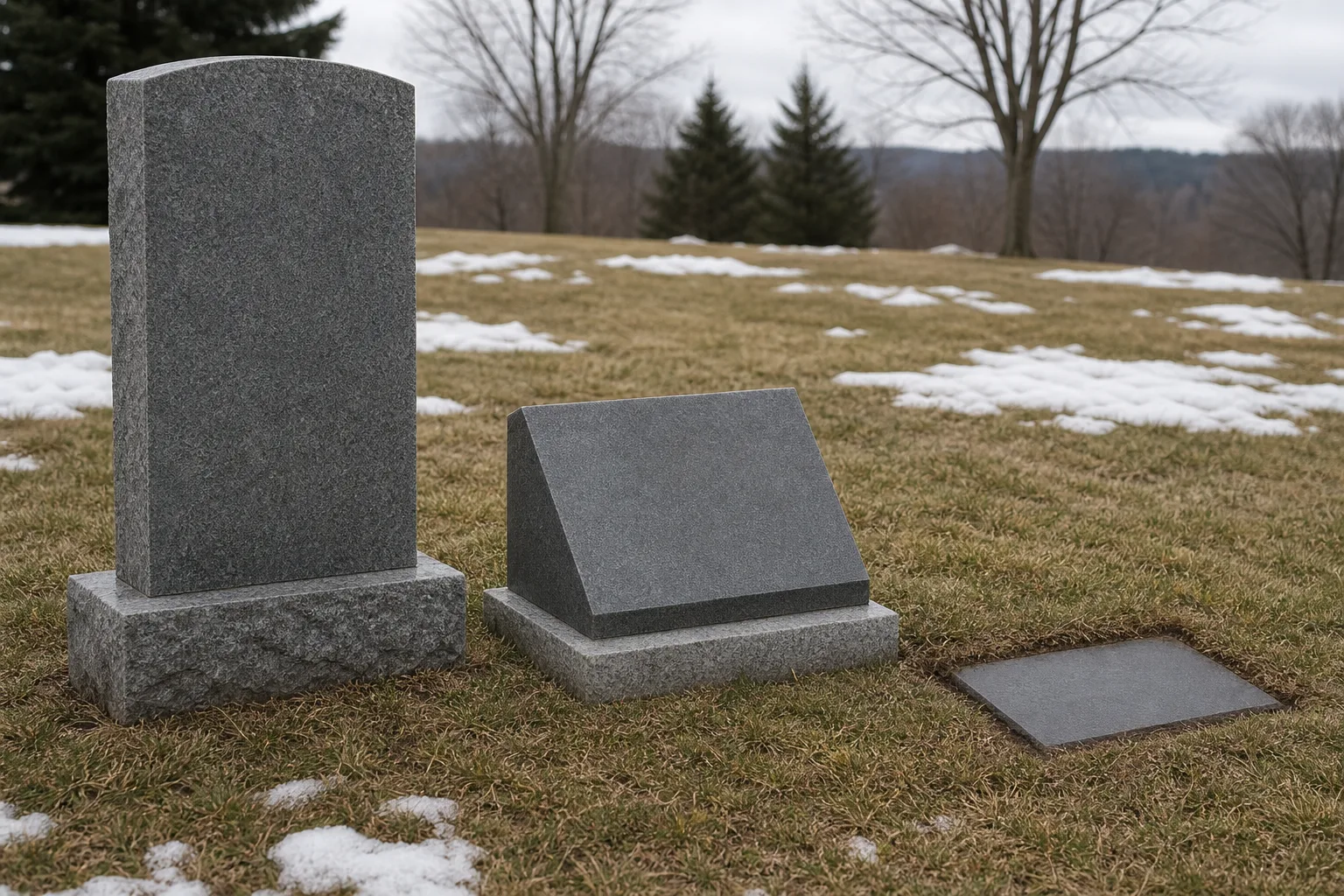
Most families choose a memorial in a single afternoon, from a catalog, under time pressure, and then live with that choice for forty years of visits. The decisions that feel cosmetic in the showroom are the ones that turn into small recurring chores: a marker that vanishes under six inches of snow every January, lettering that needs repainting on a cycle nobody mentioned, a base with no room for a second name because the first inscription was centered. None of that is visible when you are pointing at a photograph of granite. All of it is visible by the third year.
The useful way to compare memorial types is not by price alone but by what each one asks of you after it is set. Below are the four common formats, judged on the week-to-week reality rather than the sales sheet.
The four formats, and what each one demands after installation
| Format | Everyday reality | What is fixed forever |
|---|---|---|
| Upright monument (die on base) | Visible in snow and tall grass; mower and trimmer damage is rare; collects more pollen and dust on polished faces | Foundation size, base width, and therefore how much inscription space exists for later names |
| Slant marker | Readable while standing, sheds water well, easier for cemetery crews to mow around than flush stones | Single sloped face means limited room to add anything after the fact |
| Flush or lawn-level marker | Buried by snow and leaves for months in northern states; takes trimmer nicks along the edges; needs sod trimmed back every few seasons | Surface area is the whole design; the stone cannot be raised later without a new foundation |
| Bronze plaque on granite base | Develops patina; some families clean and wax it, others let it darken; raised lettering catches debris | Plaque casting is one-time, so a later name means a second plaque that will never match the first in color |
Cemetery regulations often eliminate two of these four options before you have any say in the matter, so confirm what your section permits before you fall in love with a design. The Federal Trade Commission oversees how funeral goods and services are disclosed and priced, which is why a monument dealer should be able to hand you an itemized figure for stone, lettering, foundation and setting rather than one bundled number.
Where the seasons enter the decision
Setting crews are not available year round in most of the country. Once the ground freezes hard, foundation work stops, and stones ordered in November are frequently set in April. That gap has a practical consequence families rarely anticipate: the first winter is spent visiting a grave with a temporary metal marker and a card, which is fine if you expected it and quietly painful if nobody told you. Spring brings the backlog, so a stone ordered in February may sit behind everything ordered the previous fall.
Finish choice interacts with weather more than people expect. Dark polished granite shows pollen in May, water spotting after rain and every fingerprint left by a visitor. Light gray and rose granites hide all three. Rough-hewn or pitched sides shed dirt unevenly and hold moss on the north-facing edge in damp regions. Ask the monument dealer to show you the same design in both finishes outside in daylight, because a grave stone reads very differently under fluorescent showroom light than it does on an overcast February morning with wet snow on the shoulders of the stone.
The choices that quietly close later doors
Three decisions are effectively permanent, and each one has an ordinary consequence.
- Inscription layout. If the first name and dates are centered on the face, adding a spouse later means an off-balance stone or a crowded panel. Companion designs place the first inscription on one side from the beginning, leaving the other blank. That blank space looks stark for years. It is still the right call.
- Foundation and base dimensions. The concrete foundation is poured to the size of the base you bought. Growing the memorial later means a new pour, new permit fees from the cemetery, and a seam that shows.
- Lettering method. Sandblasted and incised letters last as long as the stone. Paint or lithichrome filling in the letters improves contrast and needs renewal on a cycle, typically when you notice it looks tired rather than on any schedule. Unfilled deep-cut lettering reads well in raking sunlight and needs nothing.
Comparing on total involvement, not total cost
A flush granite marker with deep unfilled lettering is the lowest-maintenance combination that still stays legible for decades, provided you accept that it disappears under snow and leaves for part of the year and that a trimmer will eventually clip its edge. An upright monument in light granite with a vase permitted by the section rules is the highest-visibility option and the easiest to find on a first visit by a relative who has never been to the cemetery. A bronze plaque asks the most of you if you want it bright and nothing at all if you are content to let it go brown.
Write down which of those tradeoffs your family will actually keep up with in year seven, not in the first grieving month. That single note, taken before you sign, is what separates a memorial you visit comfortably from one that generates a small chore every spring.
About the author
Wesley writes about timing, and why the same job costs differently in March.