A Claim Came Back Denied. The Order to Appeal It, and What Waiting Costs
A first denied claim rarely announces itself. Here is how to read the paperwork, the sequence appeals have to follow, and the deadlines that quietly close.
| Author | Wesley Tarbox |
|---|---|
| Section | Health |
| Published | |
| Length | 1,244 words · 5 min |
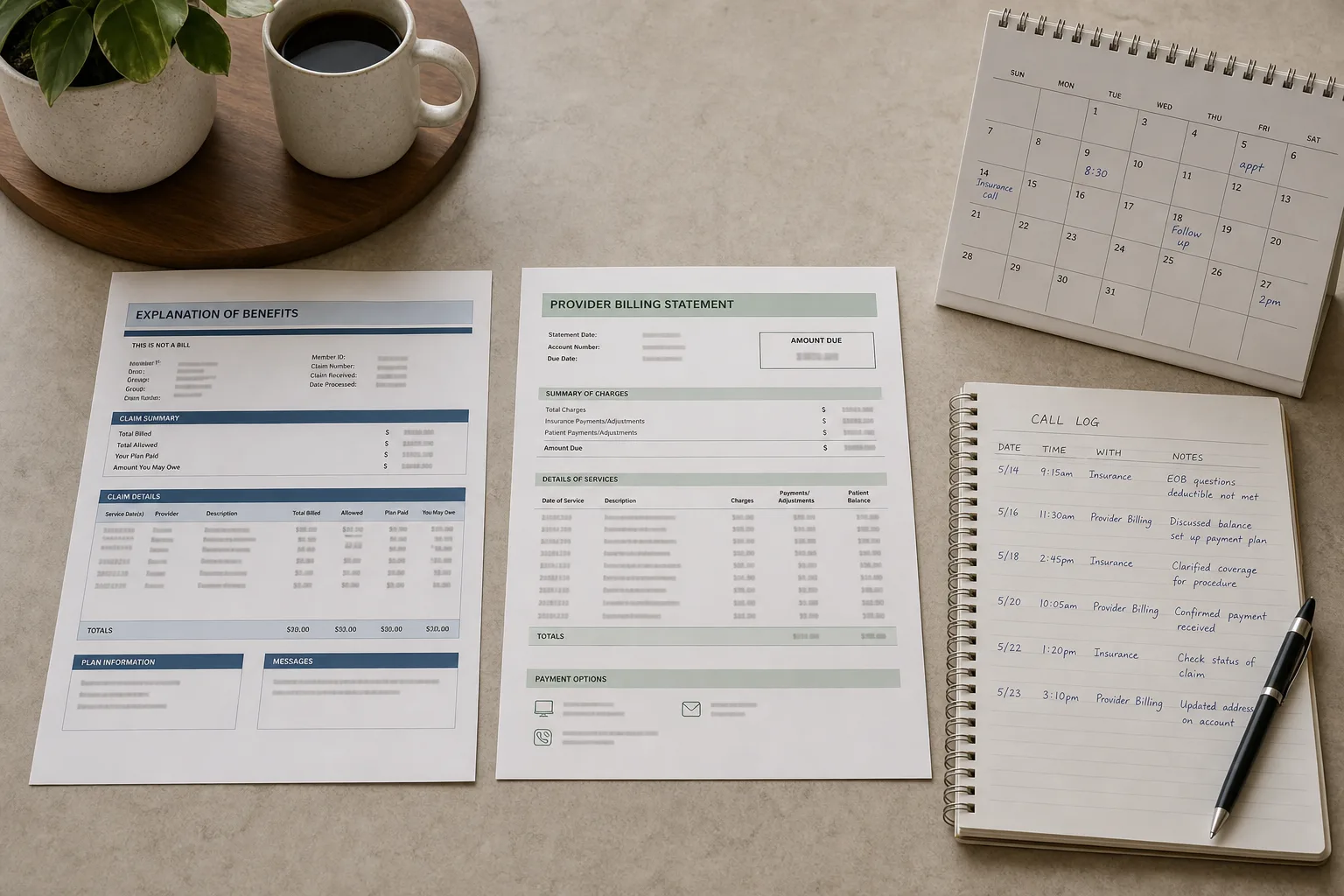
The first denial almost never arrives as a denial. It arrives as an explanation of benefits that looks like a bill but says it is not a bill, with a dollar figure in the patient responsibility column that is larger than you expected and a two- or three-character code in a narrow box off to the right. Three weeks later the provider's office sends an actual statement for that same amount. Six weeks after that, someone calls about it. By then the clock on the thing that could have been fixed in one phone call has been running for two months, and the first-timer's instinct, which is to pay the smaller amount and hope the rest resolves itself, has quietly given up the strongest position they had.
Appeals work in a fixed order. Skipping a step does not speed anything up; it usually means the later step gets closed because the earlier one was never completed. Understanding the sequence is most of the work.
What the paperwork is actually telling you
Two different events get called a denial in casual conversation, and they are handled in opposite ways. A rejection is administrative: the claim never entered adjudication because something on it was malformed. A wrong member ID, a subscriber name that does not match the enrollment file, a missing or expired referral, a date of service outside the coverage period, a place-of-service code that does not match the procedure. These are corrected and resubmitted by the billing office, not appealed by you. They are also, in the first weeks of a plan year, the single most common reason a claim comes back unpaid, because eligibility files and member IDs lag actual coverage by days or weeks.
A denial is a decision. The plan looked at the claim and declined to pay for a stated reason: not medically necessary, not covered under the plan, out of network, no prior authorization obtained, service considered experimental or investigational, or benefits already exhausted. Those are appealable, and the reason given determines what evidence you need. Medical necessity is contested with clinical records. A plan exclusion is contested with the plan document itself. A prior authorization failure is often contested with a retroactive authorization request from the ordering provider, which is a separate process with its own window.
Find the reason code and the plain-language reason before you do anything else. If the letter does not clearly state one, you are entitled to ask for it in writing, and you should, because the reason sets the route.
The consequences people rarely trace back to the denial
An unappealed denial does not sit still. Its effects show up in places that seem unrelated, and first-timers usually meet the effect before they understand the cause.
- The balance ages into collections. Provider billing cycles do not pause because you are disputing coverage. A balance can move from statement to collections placement while an appeal is genuinely pending, and unwinding that afterward takes more calls than preventing it. Tell the billing office in writing that the claim is under appeal and ask them to hold the account.
- Your deductible and out-of-pocket accounting are wrong. A denied claim generally does not credit toward either. Every later claim that year is then priced against an understated total, so you keep paying coinsurance you may have already satisfied. People discover this in November and cannot reconstruct January.
- Downstream care gets blocked. If an initial visit was denied for a missing referral, the imaging and specialist visits that followed can be denied for the same defect. One unfixed authorization can invalidate a chain of six appointments.
- The pharmacy counter says no. Step-therapy and prior-authorization denials on the medical side surface as a refill that will not process, usually on a Friday afternoon.
- Timely filing expires. Providers have a contractual window to submit and resubmit. Once it closes, the plan will not pay, and depending on the contract the balance may become yours by default rather than being written off.
The order, step by step
Work these in sequence, and do not start the next one until the previous one is closed out.
- Verify the claim data. Call the provider's billing office with the explanation of benefits in front of you. Confirm member ID, date of service, procedure and diagnosis codes, and whether the claim went to the right plan. Coordination-of-benefits errors, where two plans each think the other is primary, are common and are fixed by updating the file, not by appealing.
- Ask for a corrected resubmission if the problem is clerical. This is faster than an appeal and does not consume any of your appeal rights. Get a date and a claim number for the resubmission.
- Request the plan document and the denial rationale. Ask for the summary plan description or evidence of coverage, and the specific provision relied on. For employer-sponsored coverage, the Department of Labor oversees the claims and appeals procedures that group health plans must follow, including your right to the documents and criteria behind the decision.
- File the internal appeal. This goes to the plan and must be filed within the window stated in the letter. Write to the reason given, attach the clinical records or plan language that answers it, ask the ordering physician for a short letter of medical necessity, and reference the claim number on every page. If care is urgent, request expedited review and say why.
- Request external review. Once the internal appeal is exhausted and upheld, an independent reviewer outside the plan can look at it. This step is generally unavailable until the internal appeal is complete, which is exactly why skipping ahead costs people the option.
- Escalate to your state regulator or plan sponsor. Your state insurance department takes complaints on fully insured plans. For self-funded employer plans, the benefits office and the federal route apply instead. Find out which kind you have before you write.
What the calendar changes
January and February produce a wave of eligibility-based rejections, because new cards, new IDs and mid-cycle plan changes take time to propagate. Those are the easiest to fix and the ones most often mistaken for real denials. Spring is when the January denials, if left alone, reach collections. Late summer is a good moment to pull your claims history and check that your deductible tally matches what you have actually paid, while there is still time to correct it inside the plan year. Fall brings a second squeeze: open enrollment decisions get made on incorrect assumptions about what your current plan covered, and any appeal you want decided before the year ends needs to be filed with weeks to spare, not days.
The file you keep
One folder, physical or digital, per claim. The explanation of benefits, the provider statement, the denial letter, the plan document pages you relied on, and a dated log of every call with the name of the person, the reference number, and what they committed to. Send appeals in a way that produces proof of delivery. Note the deadline in a calendar with a reminder a week ahead of it.
Most first denials are resolved at step one or two, by a person in a billing office correcting a field and pressing send. The value of knowing the whole sequence is that you can tell within a day or two which kind you are holding, and the ones that need a real appeal get one while every window is still open.
About the author
Wesley writes about timing, and why the same job costs differently in March.