Arrested Over a Holiday Weekend? What a Flat Fee for a DUI Actually Covers
Criminal defense quotes are built around case stages, not hours, and the holiday enforcement calendar changes both what you are quoted and how fast you have to decide.
| Author | Wesley Tarbox |
|---|---|
| Section | Law & Legal |
| Published | |
| Length | 919 words · 4 min |
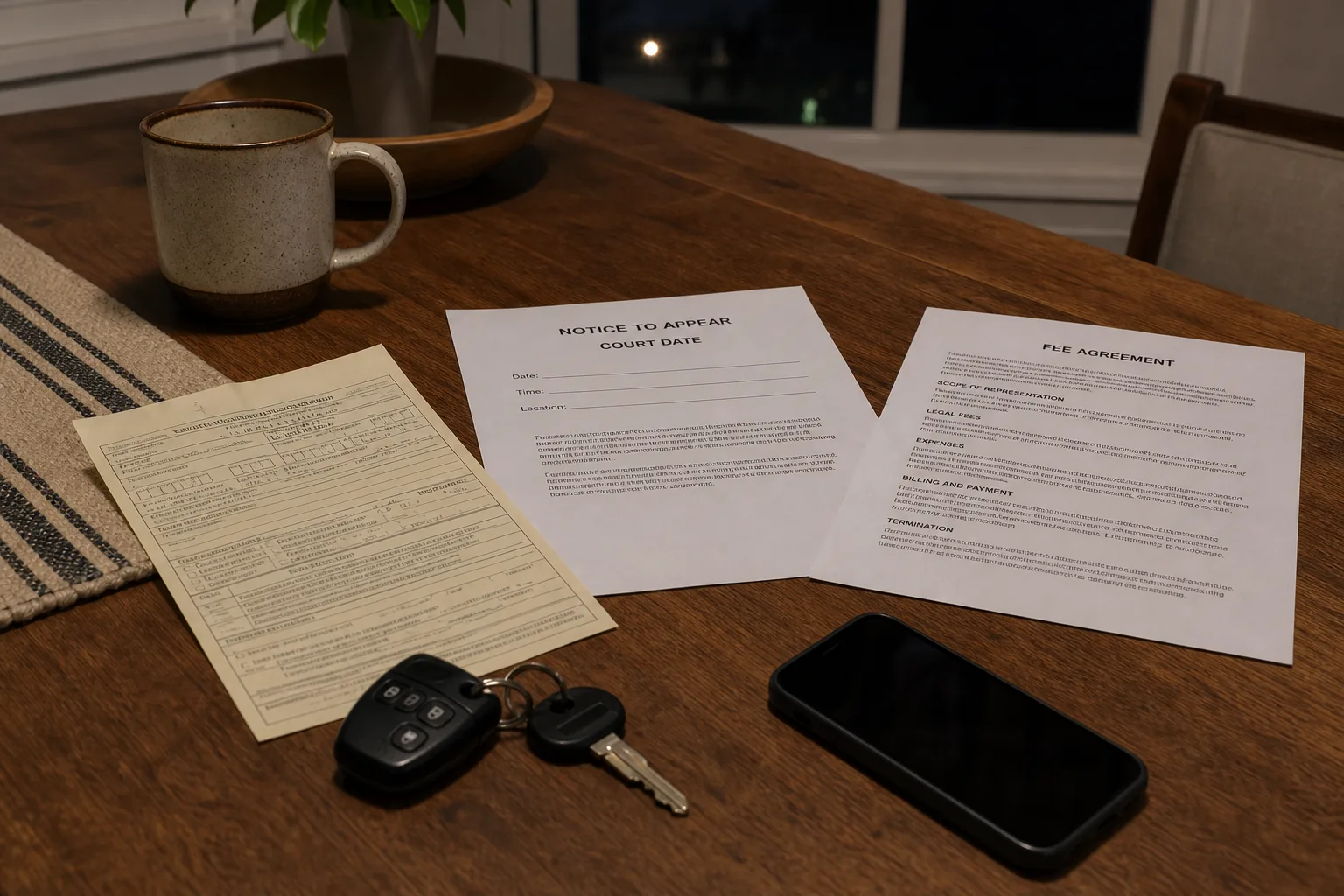
Impaired driving enforcement is not evenly spread across the year, and neither is the demand for lawyers who handle it. Patrols expand around Thanksgiving, the stretch between Christmas and New Year's Day, the Fourth of July, and Labor Day weekend. The National Highway Traffic Safety Administration oversees the federal side of impaired-driving enforcement and the grant programs that fund those seasonal patrols, which is why the same publicity campaigns reappear at the same points on the calendar every year. For a household, the practical consequence is that the phone call to a defense attorney often happens during the busiest weeks of that attorney's year, with a first court date already printed on a piece of paper and a separate license deadline running quietly in the background.
That timing matters because of how the fee gets quoted. Criminal defense is one of the few areas of private legal practice where the hourly bill has largely given way to a fixed price attached to a defined stage of the case. Understanding why that happened tells you what question to ask when a number is read to you over the phone in late December.
Why the hour stopped being the unit
Hourly billing works when the client can pay as the work happens and the lawyer can stop working if the client does not. Neither holds well in a criminal case. Once an attorney enters an appearance, a judge generally will not let that attorney walk away because a bill went unpaid, particularly close to a trial date. So the risk of nonpayment sits entirely with the lawyer, and the lawyer prices for it by collecting up front.
The other pressure came from the client's side. An hourly estimate on a first-offense case is close to meaningless, because the range between a case that resolves at a second pretrial hearing and a case that goes to a jury trial with a contested breath-test expert is enormous. Households cannot plan against that. Flat fees quoted by stage solved both problems at once: the lawyer gets paid before the work, and the client knows the ceiling for a defined chunk of the case. State bar rules pushed the practice into its current shape by requiring that the scope be written down and that unearned money be refundable, which is why modern fee agreements describe stages rather than simply naming a lump sum.
The stages a quote is actually attached to
Most fee agreements in this area divide the case somewhere along these lines:
- Pretrial representation. Arraignment, discovery requests, review of the police report, dash and body camera footage, breath or blood testing records, and negotiation with the prosecutor. Many cases end here.
- Contested motions. A hearing to suppress the stop, the field sobriety testing, or the chemical test result. Sometimes folded into the pretrial fee, often quoted separately because it requires briefing and testimony.
- Trial. Almost always a separate figure, and usually a large one, because it consumes consecutive days.
- Costs that are not fees. Expert review of a blood draw, subpoenaed records, an interpreter, transcript orders. These are pass-through expenses and should be described as such.
When you compare two quotes, you are almost never comparing the same scope. A lower pretrial number with trial priced separately can end up above a higher all-inclusive number, or well below it, depending on how the case resolves. Ask each office to state plainly what triggers the next payment and who decides that the trigger has occurred. A well-run drunk driving law firm will answer that in writing without being pressed, because the answer is already in its standard agreement.
The license case is a second quote against a shorter clock
The administrative action against your driver's license is a separate proceeding from the criminal charge, run by the state licensing agency rather than the court. It has its own request-a-hearing deadline, frequently measured in days from the date of arrest, and missing it can forfeit the hearing entirely. Because it is separate work with a separate result, it is normally a separate line on the fee sheet.
This is where the season does real damage. An arrest on December 27 puts that deadline inside a week of court closures, holiday staffing, and the days when a household is least likely to be reading its mail carefully. Any consultation that does not identify that date in the first ten minutes is not the consultation you need.
What the calendar does to price and availability
Court dockets thin out in late December and swell in January and February as holiday arrests reach arraignment. Prosecutors' offices are carrying more of these cases at once in the first quarter, which can slow negotiation and stretch a case across more hearings than the same facts would generate in April. More hearings does not raise a properly written flat fee, and that is the point of the structure: the risk of a crowded docket sits with the attorney, not with you. What does change with the season is availability. The attorney with the calendar room to take a trial date is easier to find in the spring than in the second week of January, which is an argument for calling early rather than for paying more.
Read the agreement for one specific thing before you sign: the sentence that says what happens to your money if the case ends earlier than expected. That sentence tells you whether the number you were quoted was priced against the work or against the calendar.
About the author
Wesley writes about timing, and why the same job costs differently in March.