Same Family, Same Funeral Home, Ten Years Apart. What Changed and What Was Never Required
Two arrangements in one family a decade apart, and a line-by-line look at which funeral charges are fixed, which are local rules, and which were always optional.
| Author | Corinne Adeyemi |
|---|---|
| Section | Family |
| Published | |
| Length | 1,092 words · 5 min |
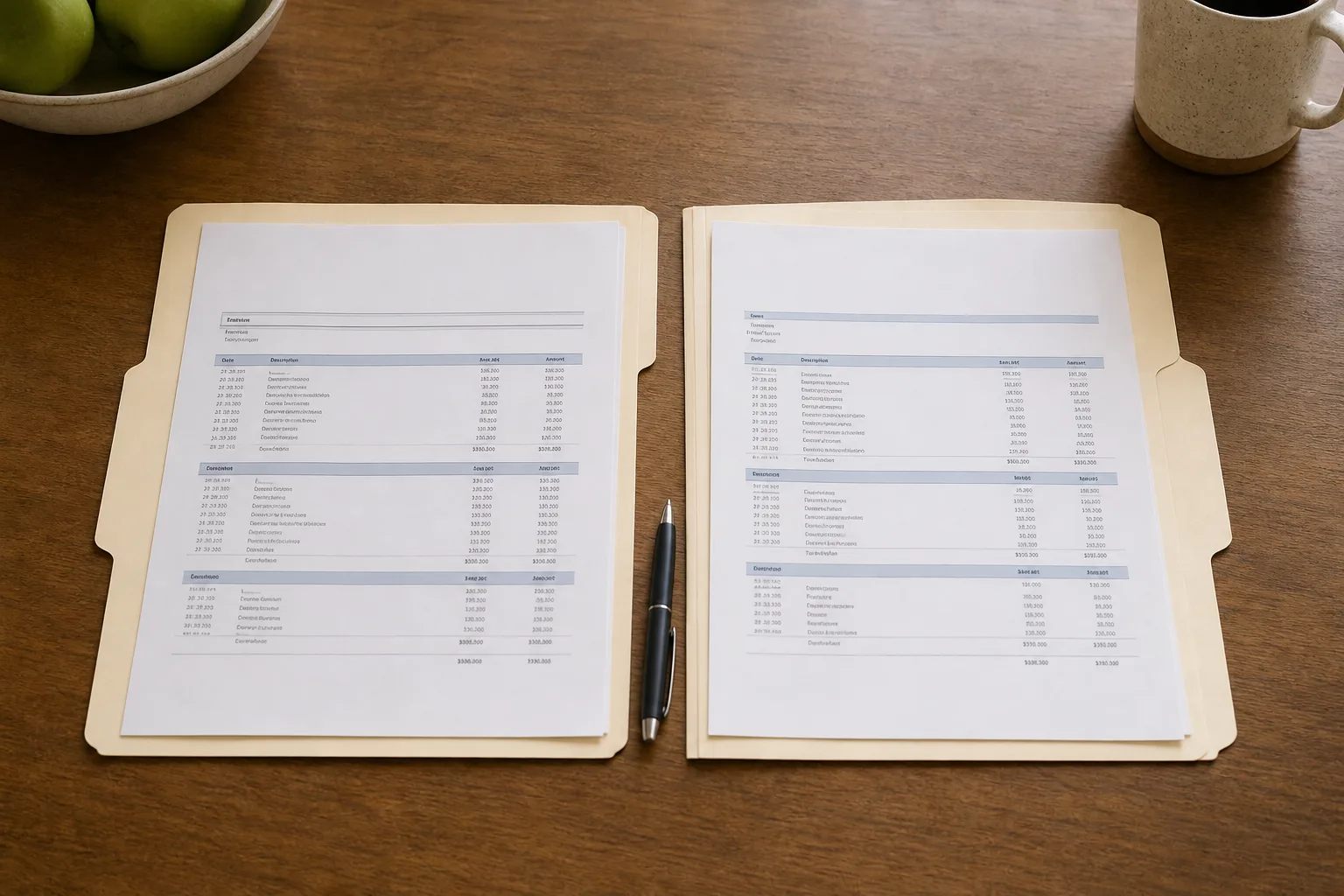
A woman I'll call Delia handled two arrangements at the same funeral home in the same small city, one in 2015 for her father and one last spring for her mother. Same street, same front office, largely the same staff. She kept both folders. Laying them side by side is about as clean a comparison as you will find, because the variables that usually muddy this kind of thing (different town, different family, different expectations) were held still. What moved was the market, a handful of local rules, and Delia's own understanding of which lines on the page were obligations and which were choices.
The useful part is not that the second funeral cost less, though it did. It is that the reduction came almost entirely from three lines, and that she could not have predicted which three from reading the price list alone.
The one charge that is not optional, and how it works
Every itemized funeral bill in the country has a charge at the top that goes by some version of "basic services of funeral director and staff." This is the non-declinable fee. It covers the overhead of the business: staff availability, coordinating with the cemetery or crematory, filing the death certificate paperwork, obtaining the permits your county requires before a body can be moved, cremated, or buried. You cannot decline it, and you should stop trying to. It is the price of admission for using a licensed funeral establishment at all.
Everything else on the page is a service you either need or don't. The Federal Trade Commission is responsible for the rule that requires funeral providers to hand you an itemized general price list before they discuss arrangements, and to let you buy only the goods and services you want. In 2015 Delia was shown that list and did not read it closely. In 2024 she read it in the parking lot before going in, which is the single highest-yield thirty minutes in this entire process.
Two things had genuinely changed in ten years. The funeral home now offered a direct cremation package it had not previously advertised, priced as a package rather than assembled line by line. And it had added a witness-cremation option with its own fee, which had not existed before. That second item is worth knowing about: if watching the start of the cremation matters to your family, ask whether the crematory allows it, because the answer varies by facility and not by law.
The three lines that carried the whole difference
In 2015 the family chose burial with a viewing. In 2024 the family chose cremation with a memorial service held two weeks later at a church hall. Those are different decisions and I am not claiming otherwise. But within the funeral home's own bill, the gap concentrated in three places.
- Embalming. No state requires embalming for every death. What some states and many funeral homes require is that a body be embalmed or refrigerated if there will be a delay or a public viewing. In 2015 Delia was told embalming was needed, and it was, because the family wanted an open-casket viewing four days out. In 2024, with no viewing, it was declined and nothing replaced it. Refrigeration for the two days before cremation appeared instead, at a fraction of the cost.
- The casket. The 2015 casket was chosen from the selection room, which is how most caskets are chosen. Providers must accept a casket you buy elsewhere and cannot charge you a handling fee for it. In 2024 the family used a cremation container, which is a rigid combustible box and nothing more. This is where the single largest dollar swing sat.
- Facility use. Using the funeral home's chapel for a visitation and a service carries a per-event charge, sometimes split into an evening visitation charge and a separate service charge. Holding the memorial at a church hall the family already had access to removed both. That is work Delia did herself: chairs, a sign-in book, a folding table, printed programs from an office supply store.
Where the local rules actually bite
Two counties over, the same set of choices would have produced a different bill, and this is the part people rarely anticipate. Cremation is governed by state law and county administration together. Many states impose a waiting period between death and cremation, commonly measured in hours, and require sign-off from a medical examiner or coroner before a cremation permit issues. Where that office is slow or only staffed on weekdays, the delay generates real charges: refrigeration, storage, sometimes a second transport.
Cemetery requirements are the other trap, and they are usually not law at all. Outer burial containers, the concrete or steel liners that surround a casket in the ground, are typically required by the cemetery's own rules to keep the grave from settling, not by any statute. Delia's father's cemetery required one. A cemetery in the next township did not. Ask the cemetery directly, in writing, before you buy anything, because the funeral home will sell you what the cemetery demands and has no reason to know whether a cheaper compliant option exists.
Scattering ashes, home funerals, and who may legally transport a body without a licensed director all vary by state as well. A few states require a funeral director's involvement in filing the death certificate no matter what the family does. Others allow families to handle nearly the whole thing. Find out which kind of state you are in before you build a plan around doing it yourself.
What to do yourself, and what to leave alone
Do the paperwork gathering: Social Security number, veteran discharge papers, insurance policies, the list of who needs certified copies of the death certificate. Order more certified copies than you think you need, because ordering them later costs more in time than money. Write the obituary yourself. Host the gathering yourself. Buy the urn or the casket wherever you like.
Leave the transport, the permits, and the handling of the body to the licensed provider. That is what the non-declinable fee buys, it is the part with legal exposure, and it is not where the savings are anyway.
Delia's second folder is thinner than her first, and the difference is not sentiment. It is three declined lines and one phone call to a cemetery office. The price list will tell you what things cost. Only the county and the cemetery will tell you which of them you are actually obliged to buy, and both will answer if you call.
About the author
Corinne writes for readers doing some of the work themselves.