Settling Is Not Losing: The Arithmetic That Tells You When to Take the Offer
An offer on the table is a certain amount now, weighed against an uncertain amount later, minus what getting there costs. Written out, most decisions become obvious.
| Author | Corinne Adeyemi |
|---|---|
| Section | Law & Legal |
| Published | |
| Length | 872 words · 4 min |
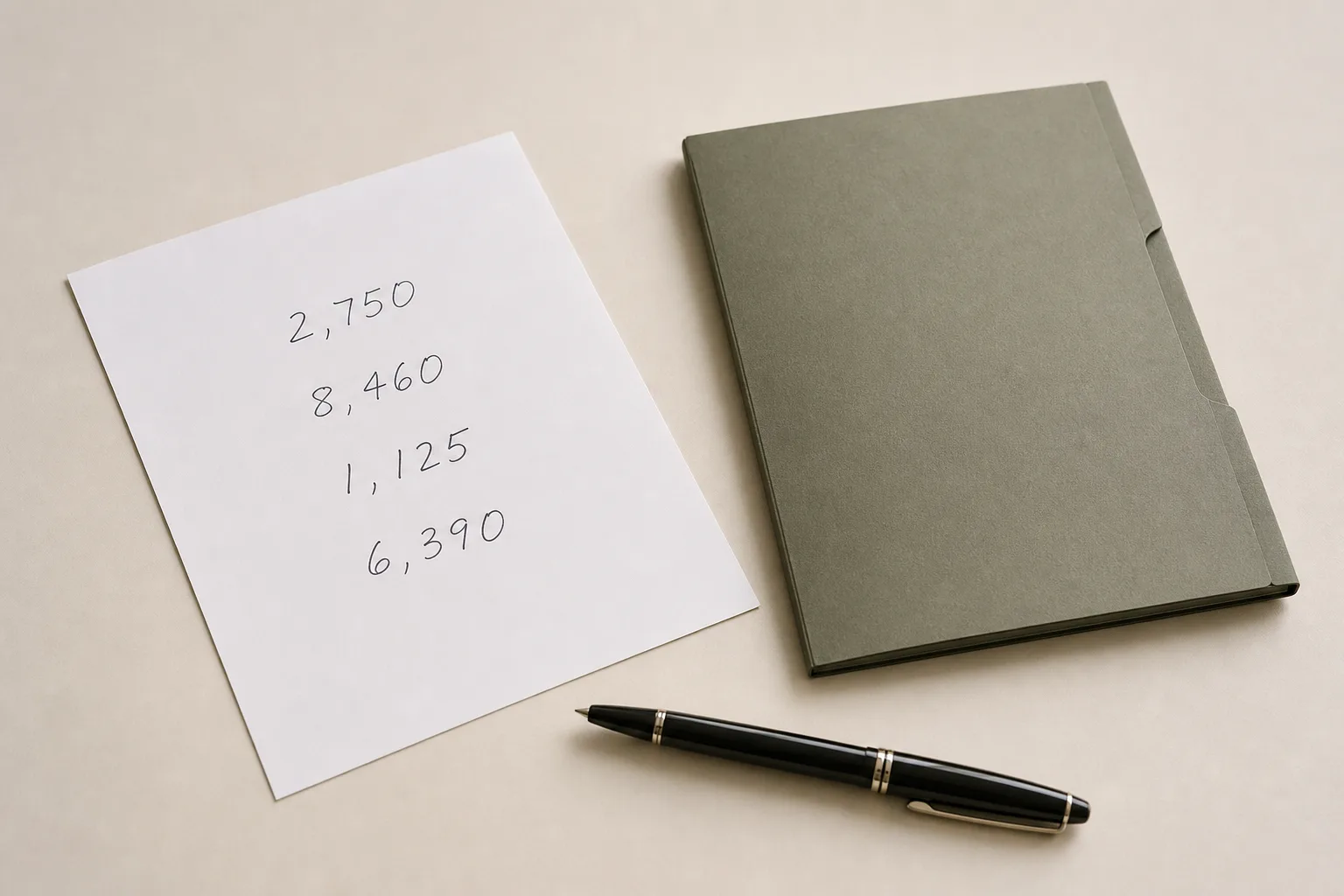
The belief that makes settlement conversations difficult is that accepting less than you are owed is a defeat, and that anybody with a strong case should see it through. That framing treats a dispute as a contest rather than as a transaction, and it costs people money every year. A settlement offer is a specific proposal: a certain sum available now against an uncertain sum available later, with the cost of getting there subtracted from the second. Written on paper with four numbers filled in, the comparison is usually clear within twenty minutes, and it is frequently clear in the direction people were resisting.
The Four Numbers That Do the Work
Write down the offer on the table, as cash actually reaching you rather than as a headline figure. Then the realistic best outcome if you proceed, which is what you would recover on a good day rather than what you believe you are owed in principle. Then your honest assessment of the chance of getting it, expressed as a percentage, which is the number people distort most and the one an outside opinion helps with most. Then the cost of proceeding: fees, filing costs, expert reports, and the days of your own time valued at what a day is worth to you. Four figures, none of which requires expertise to estimate roughly.
The Comparison, Which Is One Multiplication
Multiply the best outcome by the probability, subtract the cost of getting there, and compare the result with the offer. That single line is the entire method, and it is what insurers, corporate defendants and experienced attorneys are doing on their side of the table, generally with more discipline than the individual across from them. A claim worth a substantial sum at even odds, costing a meaningful amount to pursue, is often worth less on this arithmetic than an offer that feels insultingly low, and discovering that is not a reason to be discouraged. It is a reason to negotiate against the right number.
The Two Adjustments Almost Everybody Leaves Out
Time is the first. Money now is worth more than the same money in eighteen months, and the gap is larger than the interest rate suggests when the money is needed for something specific. A settlement that arrives in three weeks and a judgment that arrives after a year and a half are not comparable amounts even when the figures match. Collection is the second and it is the one that decides more cases than people realize. A judgment is only worth what can be collected from the defendant, so an offer from somebody solvent may be worth more in practice than a larger judgment against somebody who has nothing, and that assessment belongs in the arithmetic rather than after it.
When Holding Out Is the Right Answer
The method is not an argument for settling, and it points the other way often enough to be trusted. Where the case is genuinely strong and the cost of proceeding is low, small claims being the clearest example, the expected value beats most offers comfortably. Where an ongoing relationship or a matter of record is at stake, a principle worth defending or a licensing consequence, the money is not the whole of what is being decided. And where the other side's offer has been rising steadily, the offer on the table is information about their assessment rather than their final position.
Which raises the single most useful move available before any decision gets made: ask for a better offer, in writing, with one short reason attached. It costs nothing, it carries very little risk of the existing offer being withdrawn in an ordinary civil matter, and a surprising proportion of first offers improve when somebody simply declines to treat them as final. Give the reason in a sentence, name a figure rather than inviting them to guess, and set a date for a reply. First offers are usually positioned to be accepted by people who are tired.
Writing It Down Properly Once You Decide
Whatever the answer turns out to be, do the arithmetic on paper rather than in your head, because the value of the exercise lies in seeing the four numbers next to one another rather than in the calculation itself. Date the sheet and keep it, since it is the document to reread when a second offer arrives and the temptation to reopen the entire decision returns. It is also the thing to show anybody advising you, because a disagreement about whether to settle is nearly always a disagreement about one of the four figures, and having them written down turns an argument about instinct into a discussion about a probability.
And when a settlement is reached, get it in writing before any money moves, with the amount, the deadline for payment, exactly what claims are being released, and whether anything is confidential. A settlement that resolves the dispute and leaves the release ambiguous has bought a second argument, which is precisely what the whole exercise was meant to avoid. Done properly, taking the offer is not a concession. It is the outcome that survived the arithmetic, which is a considerably better reason to accept something than being tired of it.
About the author
Corinne writes for readers doing some of the work themselves.