Small Claims Court Is Cheap to File and Collecting Is a Separate Project Entirely
Filing fees are modest and no attorney is needed. What people are rarely told is that winning and being paid are two different projects with different odds.
| Author | Junko Halloran |
|---|---|
| Section | Law & Legal |
| Published | |
| Length | 1,036 words · 4 min |
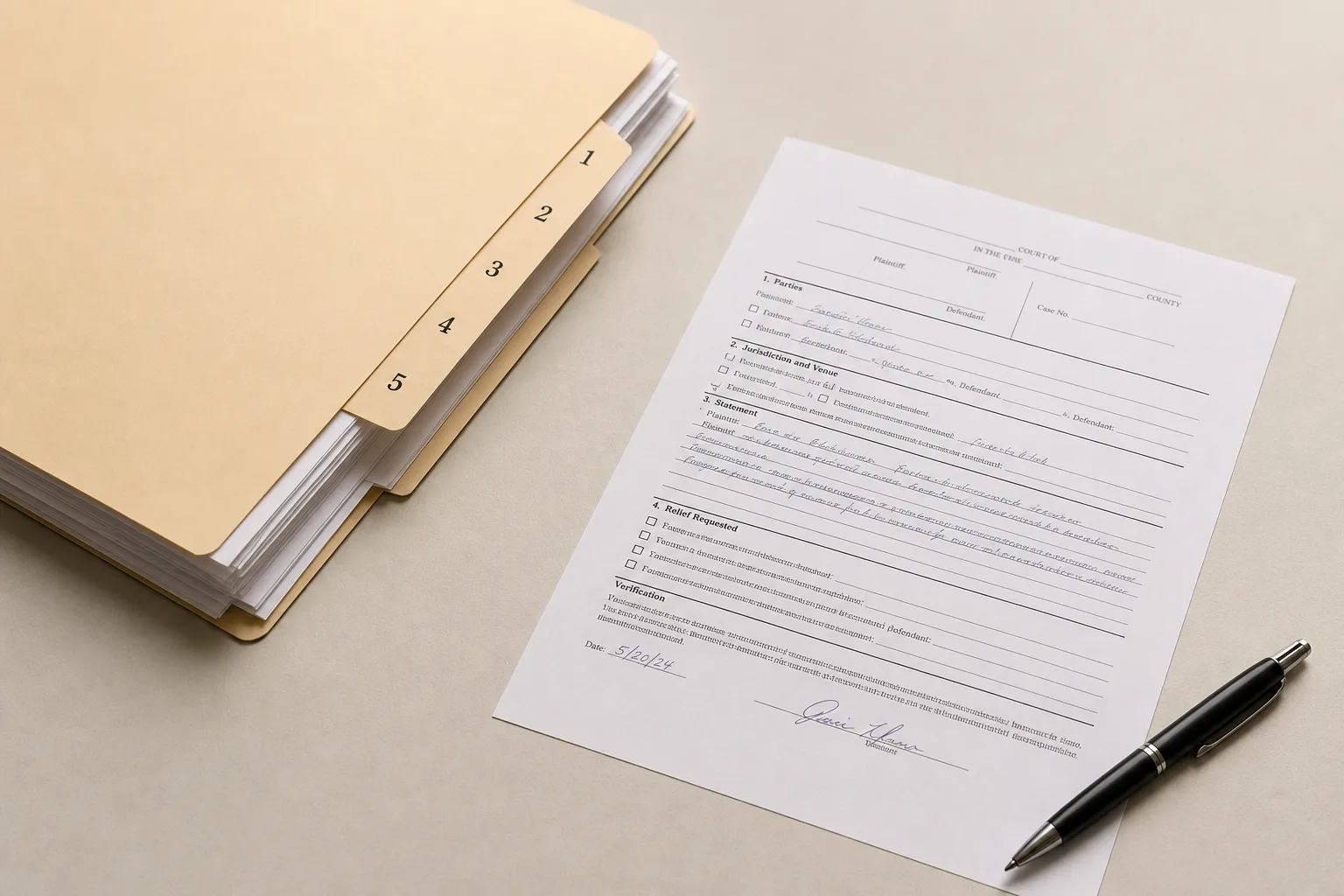
Picture the moment somebody decides to go to small claims court. A contractor has kept a deposit, a landlord has withheld a security deposit, a repair shop has damaged something and stopped answering. The filing fee is modest, no attorney is required, and the whole thing has the appealing shape of a problem with a defined ending. That much is accurate. What tends to be left out of the description is that a judgment is a piece of paper declaring that somebody owes you money, and turning that paper into money is a second undertaking with its own steps and its own odds.
What Bringing a Case Actually Costs
The direct costs are genuinely small. Filing fees in most states run to a modest sum scaled to the amount claimed, service of process adds a further charge whether done by a sheriff's office or a private process server, and there may be small fees for subpoenas or for a postponement. Fee waivers exist for people who cannot afford the filing fee. The larger cost is time: assembling evidence, filing correctly, serving the defendant properly, and appearing on a date the court chooses, which for anybody self-employed means a day not worked. Count that day honestly, because it is usually the largest number in the exercise and it is the one nobody puts on the list.
How the Process Runs From Filing to Hearing
You file a short statement of claim naming the correct legal defendant, which for a business means its registered entity name rather than the name on the truck, and that detail derails more cases than any argument does. The court issues a summons which must be served in a manner the state accepts. A hearing date follows, usually within a couple of months. Hearings are short, often fifteen or twenty minutes, informal in tone, and decided almost entirely on documents. Everything you intend to show should arrive in triplicate, since the bench keeps a set, the opposing party gets a set and you need one in your own hands, and it should be ordered so any single item can be found in seconds.
Presentation matters less than people fear and organization matters more. A claimant who can say what was agreed, what happened, what it cost, and hand up a dated document supporting each of those, is doing the job. A claimant who arrives with a grievance and a folder in no order is asking a judge to do the sorting in fifteen minutes.
What Collecting Actually Involves
Winning does not cause money to move. A defendant who pays voluntarily settles the matter, and a great many do once a judgment exists, but a defendant who does not obliges you to enforce it, and enforcement is a separate set of filings. The usual tools are wage garnishment, a bank levy, and a lien recorded against property, and every one of them requires knowing something specific: where the person works, where they bank, what they own. Courts provide a procedure for compelling a debtor to disclose that, which is another filing and another appearance. Enforcement also carries its own fees, recoverable in principle and payable by you in the meantime.
Judgments do not expire quickly, which is the one genuinely encouraging feature of this stage. They remain enforceable for a period of years in every state and can usually be renewed, so a defendant with nothing today may be enforceable against in three years when they take a job, open an account, or sell a property against which a lien has been recorded. Recording the lien is often the single most useful enforcement step available, because it costs little, requires nothing of the debtor, and waits patiently until they need clear title to something.
The Question to Ask Before Filing Anything
One question determines whether the whole exercise is worth beginning: can this defendant pay, and can I find what they can pay from? An established local business with premises, a bank account and a reputation to protect is a defendant who will usually settle rather than litigate and will usually pay a judgment rather than be enforced against. An individual with no fixed employment, a business that has already dissolved, or a company that appears to be one person and a phone number are all defendants against whom a judgment may be genuinely uncollectible. It is not a pleasant question and it is the one that separates a sensible filing from an expensive gesture.
Where the answer is uncertain, a demand letter first is the cheapest possible test of it. It costs a stamp, it frequently produces payment or an offer without anything further, and the response, or the absence of one, tells you a great deal about what a judgment would eventually be worth against this particular defendant. A business that replies with an argument is a business that intends to keep operating and cares about the outcome. One that does not reply at all, and whose registered address turns out to be a mailbox, is telling you something about the enforcement stage before you have paid a filing fee.
What Makes These Cases Go Well
Three things, and none of them requires legal training. A claim built on documents that existed before the argument started, a contract, an invoice, a dated message, beats a claim built on what was said in a driveway. A number that can be justified with a receipt or a written quote beats a round figure that sounds fair. And a claimant who is specific and brief beats one who is thorough and aggrieved, because the judge is deciding a narrow question and everything outside it is noise.
Understood this way, small claims is a genuinely useful institution rather than a disappointing one. It exists precisely so that ordinary amounts of money are worth pursuing without an attorney, and it works well for the cases it was designed for: a solvent defendant, a documented obligation, and a claimant willing to spend a day. The mistake is not using it. The mistake is treating the hearing as the finish line, when for anybody facing a defendant who will not pay voluntarily, it is closer to the halfway point.
About the author
Junko covers what work costs and why two quotes for the same job differ.