After the Hail, Before the Signature: Sorting the Trucks That Arrive on Your Street
After a hailstorm the street fills with trucks from out of state. Some of them do good work. Telling which is which takes about four questions.
| Author | Wesley Tarbox |
|---|---|
| Section | Law & Legal |
| Published | |
| Length | 1,095 words · 5 min |
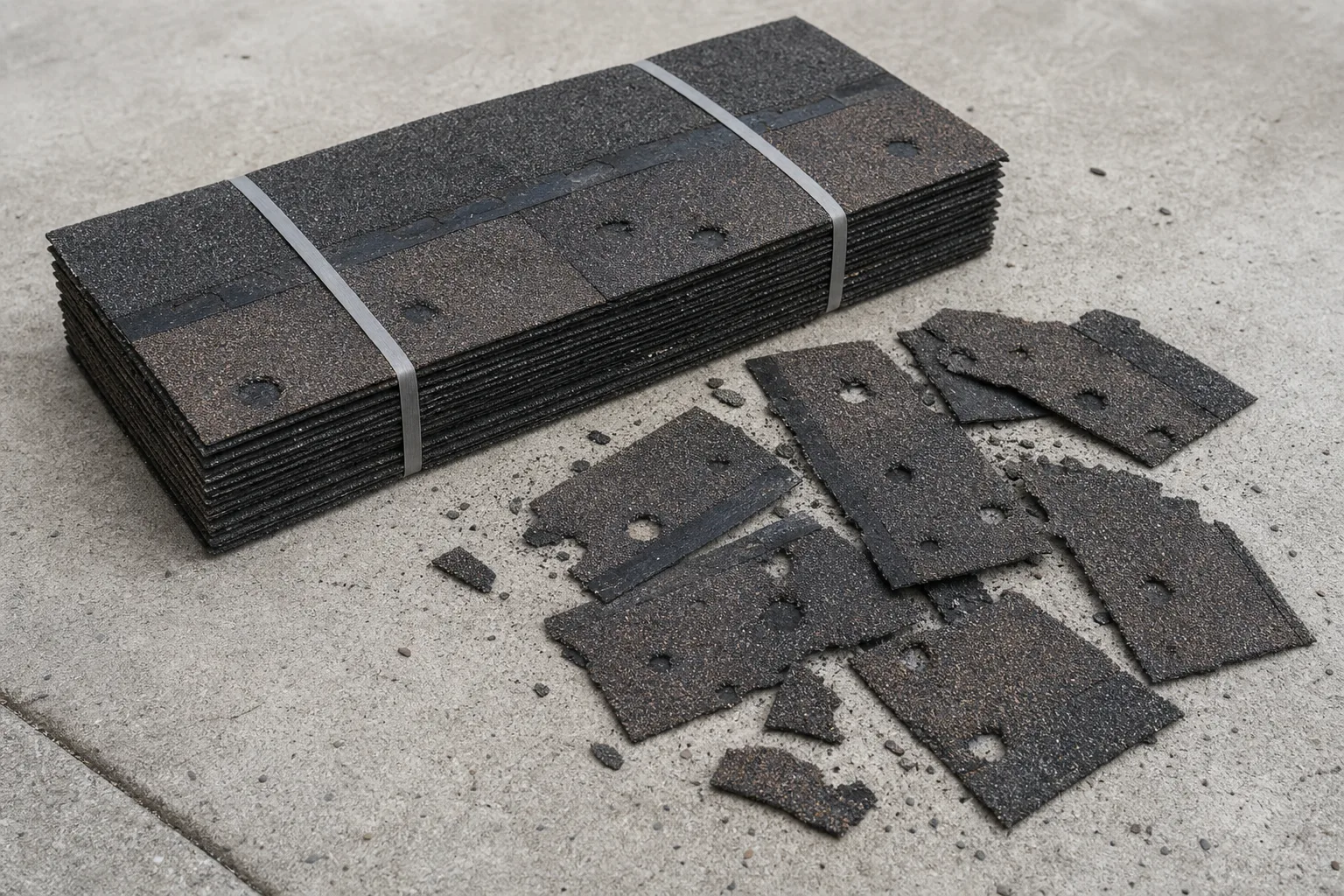
Picture a residential street the week after a serious hailstorm. Pickup trucks with out-of-state plates work the block in pairs, clipboards in hand, offering free inspections and pointing at neighbors' roofs. Some of those crews are competent, insured, and doing exactly what a storm response is supposed to look like, since a hailstorm generates more work in a week than local roofers can absorb in a season. Others are working the same street for a different reason. The two look identical from a front porch, which is why the sorting has to be done with questions rather than with impressions.
What a Legitimate Approach Actually Looks Like
A reputable storm contractor will identify their company and where it is based without being asked, will offer to inspect and to document what they find, and will leave you with a written report whether or not you engage them. They will not need an answer today. They will be willing to come back when a spouse is home, will provide a license number and proof of insurance without treating the request as an insult, and will describe the claim process as something the homeowner does with their insurer rather than something the contractor does on their behalf. Nothing about that description is subtle, and a crew that fails several parts of it has told you a good deal.
The pressure tactics are equally recognizable. A price good only today, a claim that the insurer's deadline is about to pass, an offer to start work immediately because the crew happens to be on the street, or a suggestion that the damage should be described a particular way to the adjuster: any of those is a reason to stop the conversation rather than to negotiate it.
The Document to Read Before Signing Anything
The single most consequential piece of paper in storm work is often presented as an authorization to inspect or a contingency agreement, and it is frequently a binding contract. Read what it actually says. Some versions commit you to using that contractor for whatever the insurer approves, at whatever the insurer pays, with a cancellation fee attached if you go elsewhere. Others assign your claim benefits to the contractor directly, which puts them between you and your insurer in a way that is difficult to reverse. Neither is automatically improper, and both should be a deliberate decision rather than something signed on a porch to make a conversation end.
Four Questions That Sort It Quickly
Ask where the company is based and whether they will still be reachable in three years, since a roof warranty from a company that leaves the state in November is a warranty against nothing. Ask for a license number if your state licenses roofers and check it, which takes two minutes on a phone. Ask for a certificate of insurance showing both liability and workers compensation, sent directly from the insurance agency rather than handed over as a photocopy. And ask who is actually performing the work, because a great deal of storm work is subcontracted, and the crew on your roof may have no relationship at all with the person standing on your porch.
Two of those four answers can be verified before the salesperson leaves, which is worth doing while they are still there. A license number checks against a public register in under two minutes. A certificate of insurance can be requested by email from the agency named on it, and a company that is genuinely covered will have that request answered the same day. The remaining two are judgment calls, and a company that answered the first two crisply has already earned some benefit of the doubt on the others.
Then do the thing that costs the most patience and is worth the most: get a second estimate from a local company with a physical address you can drive to. A homeowner who has two written scopes in hand can compare what each proposes to do, which is a far better basis for a decision than comparing two impressions of two salespeople.
The Deposit Question, Which Has a Clear Answer
Roofing material for a typical house is not custom-ordered and is available from local suppliers on credit, which means a large deposit before any work begins is a question worth asking about rather than a normal cost of doing business. Many states cap what a residential contractor may collect up front, and a request for half the contract value before a crew appears sits well outside ordinary practice. Pay by check or card rather than cash, keep every receipt, and never pay the final amount until the work has been inspected, the site cleaned, and any required municipal inspection passed.
There is one more payment question specific to insured storm work, and it comes up constantly. An offer to waive or absorb the deductible sounds like a favor to the homeowner and is not one, since the deductible is the homeowner's share under the policy and a contractor covering it has to recover the money somewhere, usually by inflating the scope submitted to the insurer. A company proposing it is describing how they intend to handle your claim, which is useful information arriving early.
Your Right to Cancel, and Where to Go If Something Went Wrong
Contracts signed at your home rather than at a place of business generally carry a cancellation right lasting a few days, a rule that exists precisely because door-to-door selling puts people under pressure in their own doorway. The contractor is required to tell you about it and to give you the paperwork to use it, and cancelling in writing inside the window is the cleanest way out of an agreement made too quickly. Where something has already gone wrong, the state contractor licensing board handles license complaints and the state attorney general handles consumer fraud, and the Federal Trade Commission is where the cancellation rule for home sales comes from and where reports of deceptive practices are collected and matched against operations working across several states.
All of which sounds adversarial and is really the opposite. Storm response depends on out-of-town crews arriving in volume, and the good ones are the reason a neighborhood is repaired before winter instead of over two years. Four questions asked at the door take five minutes and cost nothing, and they do not offend a company that answers them every day. They simply move the conversation from a porch impression to a set of verifiable facts, which is where a decision about a roof belongs.
About the author
Wesley writes about timing, and why the same job costs differently in March.