Fogged Glass in Three Places, and What Each One Says About the Window
Condensation on the room side, between the panes, or on the outer face are three different messages. Here is how to tell them apart and what each one costs to fix.
| Author | Corinne Adeyemi |
|---|---|
| Section | House & Home |
| Published | |
| Length | 1,269 words · 5 min |
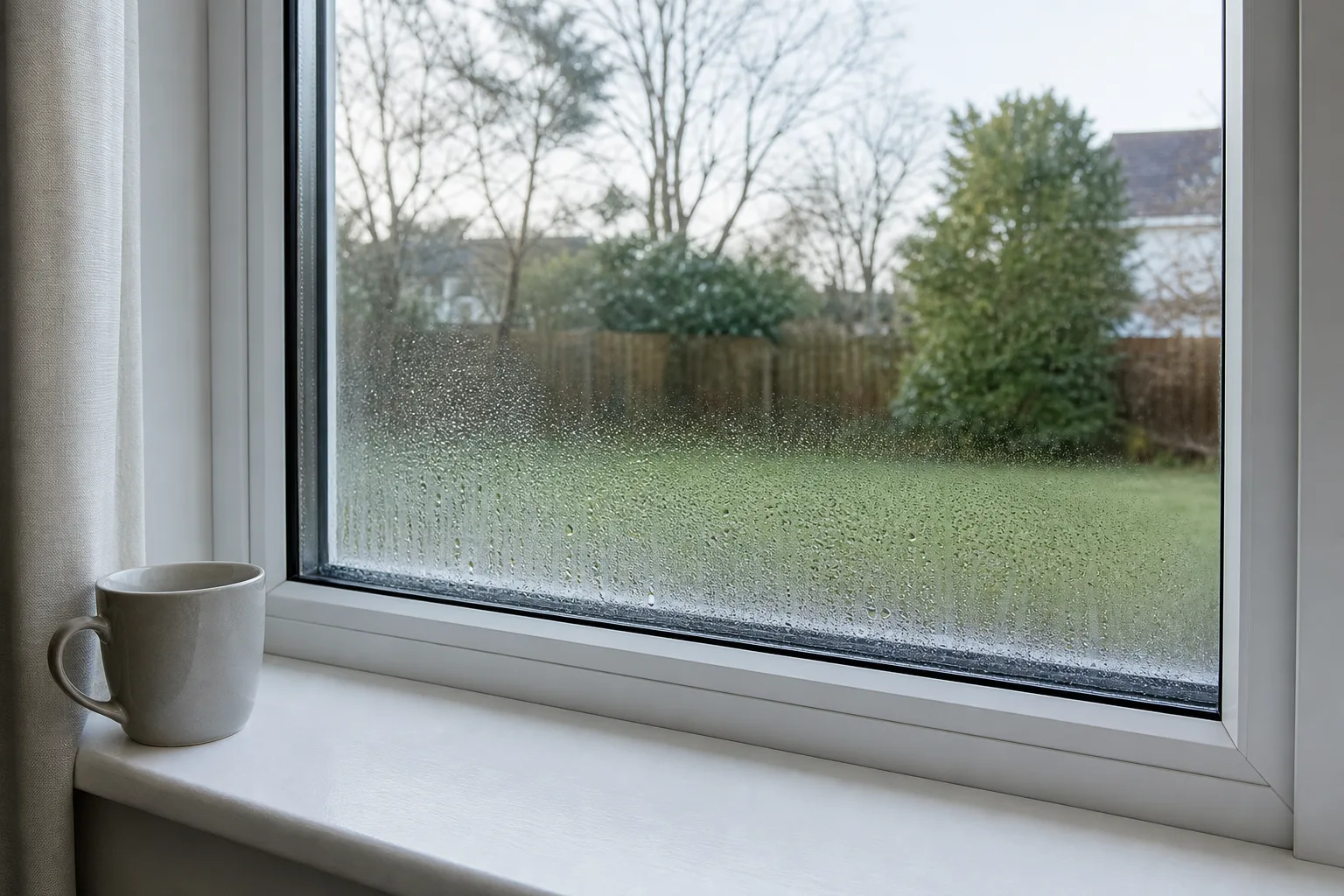
Water on glass is one of the few diagnostic signals a house gives you for free, every morning, in a place you are already looking. The trouble is that it is three different signals wearing the same coat. Condensation on the room-side face of the glass, condensation sealed inside the gap between two panes, and condensation on the outdoor face all look alike from six feet away at seven in the morning. They mean completely different things, they cost wildly different amounts to resolve, and only one of them is a fault in the window itself. Learning to read which is which takes about a week of paying attention and saves you from paying for the wrong repair.
Why the glass stopped being the cold thing in the room
To understand what you are looking at, it helps to know how windows got to their current state. A single pane of glass in a wood sash is a thin, highly conductive surface with outdoor temperature pressed against one side of it. In January, that pane sits far below the temperature of the room, and the moisture a household generates by breathing, showering, boiling pasta and running a dishwasher finds it immediately. Older houses ran wet windows every cold morning as a matter of course. People wiped them, or they did not, and the sills rotted on a slow schedule everybody accepted.
Two changes altered that. The first was the insulated glass unit: two (sometimes three) panes separated by a sealed cavity, often filled with argon, held apart by a spacer around the perimeter and sealed at the edge. The second was the low-emissivity coating, a microscopically thin metallic layer that reflects heat back toward the side it came from. Together they raised the interior surface temperature of the glass substantially. The room-side pane is no longer the coldest thing in the room by a wide margin. Then houses themselves got tighter: better air sealing, better weatherstripping, continuous insulation, mechanical ventilation where codes require it. Less air leakage means less accidental drying. The Department of Energy is the federal body that oversees residential energy performance standards, and the direction of travel there has been consistently toward tighter envelopes and warmer glass.
The practical result for your week: the moisture that used to land harmlessly on cold single panes and get wiped away now has fewer places to go. When a modern window fogs on the inside, it is usually reporting on the air in the room rather than on the window.
Comparing the three locations
Run the test with a fingertip. Wipe the inside face. If the water goes away and your finger is wet, the moisture is in the room. If the fog stays and the glass is dry to the touch, it is between the panes. If you can see it from inside but a hand on the glass finds nothing, step outside: it is on the exterior face.
| Where it forms | What it means | Typical response |
|---|---|---|
| Room-side face | Indoor humidity is high relative to the glass temperature. A ventilation and moisture issue, not a glazing defect. | Source control and air movement. Usually no cost beyond running fans. |
| Between the panes | The perimeter seal on the insulated unit has failed and moist air is getting into the cavity. | Replace the glass unit. The sash and frame normally stay. |
| Exterior face | The outer pane is colder than the dew point of the outside air, which happens when the glass is insulating well. | Nothing. It clears with the morning sun. |
That last row surprises people who have just paid for new windows. Exterior condensation on a clear, still night is a sign the low-E coating and the gas fill are doing their job: so little heat is escaping through the unit that the outer pane drops to the temperature of the night sky. It is an outcome, not a defect. It happens most in spring and fall, when nights are cool and daytime humidity is high, and it burns off within an hour of direct sun.
The room-side version, week to week
Interior condensation follows the rhythm of how a house is used, which is why it is worth tracking for seven days rather than reacting to one bad morning. Sunday laundry, a long shower before an early shift, a pot of soup on Tuesday, a dozen people over on Saturday: each of these dumps moisture into the air, and the bedroom window at the far end of the house reports it at six the next morning. Bedroom windows are the usual first offenders because two sleeping adults release moisture all night into a closed room with the door shut.
The fixes are mostly behavioral and cheap. Run the bathroom exhaust fan for twenty minutes after the water stops, not two minutes. Use the range hood when you boil anything, and confirm it vents outdoors rather than recirculating through a filter. Open blinds and heavy drapes during the day so room air can reach the glass instead of being trapped against it in a cold pocket. If a specific room is persistently wet, a hygrometer costing less than a tank of gas will tell you whether you are sitting at thirty-five percent or fifty-five percent relative humidity in winter, and the difference is visible on the glass. Where the house has a whole-home humidifier on the furnace, turn the setting down as outdoor temperatures fall. Many are left at a summer-ish setting all year.
If you have done all of that and one window still streams while its neighbors stay clear, the problem has moved from air to assembly: an air leak chilling that specific pane, a failed weatherstrip, or a sash that no longer closes square.
Failed seals, and who actually fixes them
Fog trapped between the panes is the one that is genuinely the window's fault. The edge seal has given up, the desiccant in the spacer is saturated, and every temperature swing pumps damp air in and out of the cavity. You will often see a hazy ring or mineral streaking that never wipes off. It will not reseal itself, and defogging services that drill and vent the unit remove the symptom while leaving the cavity open to outside air.
The repair is to replace the insulated glass unit, not the whole window, in most cases. A glazier measures the existing unit, including thickness and coating type, and orders a replacement that drops into the same sash. For a house, a residential glass shop handles this; for a storefront, an office entry, or anything in an aluminum curtain wall, the work belongs to a commercial glass company with the equipment to handle large, heavy units safely. Either way, ask whether the original window carries a transferable warranty on the sealed unit, since many run ten to twenty years and a failure inside that window may cost you only labor.
The part you should not take on yourself is removing and resetting the glazing stops on a large unit. Insulated glass is heavier than it looks, the edges chip easily, and a unit that is set without proper setting blocks will fail again at the bottom corners within a few years. Measuring, ordering, and confirming the coating is reasonable homeowner work. Lifting is not.
Give it a week of looking before you call anyone. Note which windows, which rooms, which mornings, and which face of the glass. That short record turns a vague complaint about foggy windows into a specific request, and it is the difference between replacing one sealed unit and being quoted for a whole elevation.
About the author
Corinne writes for readers doing some of the work themselves.