Raising Prices on the Customers Who Have Been Paying the Same Rate Longest
The accounts hardest to reprice are the ones that have been on the same rate longest, which is precisely why they are the ones costing you money.
| Author | Corinne Adeyemi |
|---|---|
| Section | Enterprise |
| Published | |
| Length | 934 words · 4 min |
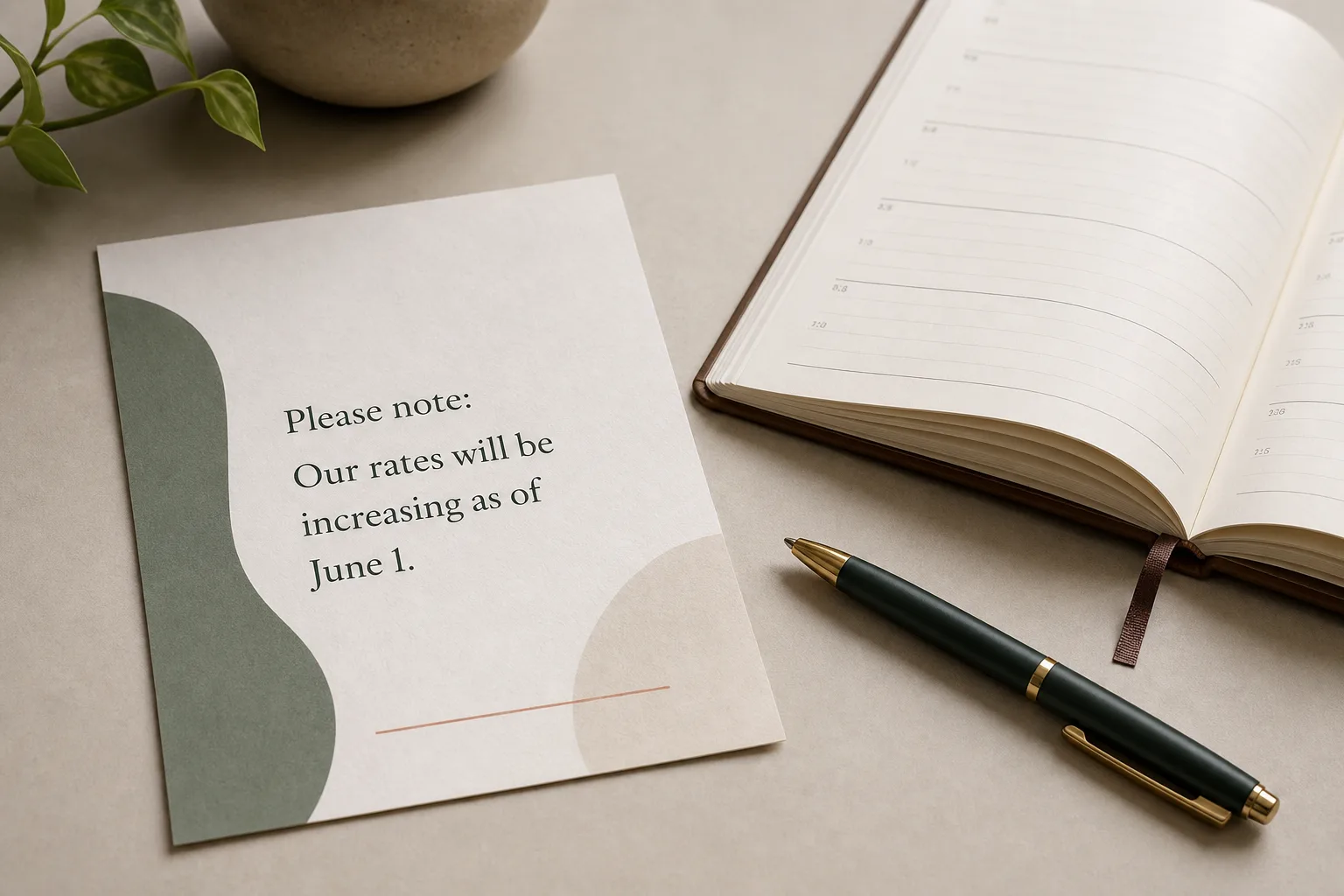
Ask any small service business owner which customers they dread repricing and the answer is never the difficult ones. It is the pleasant, loyal, long-standing accounts who have been paying the same figure since somebody quoted it across a kitchen table years ago. The relationship makes the conversation feel like a betrayal, so it gets postponed, and every year of postponement makes the eventual increase larger and harder. Those accounts are usually the least profitable work in the business, and the reason they are the hardest to change is precisely the reason they most need changing.
Work Out What Each Account Is Actually Worth First
Before any conversation, put a number on every recurring customer. What is charged, how long the work genuinely takes including travel, what materials it consumes, and what that leaves per hour once overhead is applied. This is uncomfortable arithmetic and it usually produces two surprises: at least one long-standing account is being served at close to no margin, and at least one account everybody assumed was marginal is fine. The exercise takes an evening with an invoice list and a notebook, and without it the whole discussion runs on feeling rather than on figures.
Do the same arithmetic for the work you are currently quoting to new customers, because that comparison is the one that makes the case. Most service businesses have raised their price to new customers steadily and left existing accounts where they were, which means the customer who has been loyal for six years is paying materially less than the one who called last month for the same job. Put those two numbers side by side on a single line. That gap is the whole argument for the conversation, and it is considerably easier to act on once it has a size.
Decide the Number and the Date Before Speaking to Anybody
Set the new rate, set the date it takes effect, and decide how much notice you will give, usually a month or two for recurring work. Write all of it down before the first conversation. The reason for the sequence is straightforward: a price decided during a phone call with a customer you like is a price decided by whoever is more uncomfortable, and that is reliably you. A number already fixed can be delivered rather than negotiated, and it can be delivered the same way to everybody, which is both fairer and considerably easier to keep track of.
Write to Everyone, Then Call the Ones Who Matter Most
A short written notice to every affected customer does most of the work. Say what the new rate is, say when it starts, give a brief and honest reason, and thank them for the business, all in under a hundred words. Do not over-explain, do not apologize, and do not itemize your cost increases, since a letter that reads as defensive invites a negotiation. Then telephone the handful of accounts that represent the largest share of revenue, before the letter arrives rather than after, because those customers deserve to hear it from you and a call turns an announcement into a conversation you are still leading.
Expect Considerably Less Pushback Than You Are Bracing For
The near-universal experience of people who do this properly is that the anticipation was worse than the event. Most customers of a small service business are not tracking your rate against anything, have absorbed increases everywhere else in their lives, and value continuity with somebody reliable well above a modest difference in price. A proportion will not respond at all. A few will ask a question and accept the answer. The ones who object usually object once, and a calm restatement of the number without any movement settles most of those, because the objection is a reflex rather than a decision.
Where somebody genuinely cannot pay the new figure, there is a better answer available than discounting, and it is one most owners never think to offer: change the work rather than the rate. Reduce the frequency, remove an element from the service, or move the customer onto a smaller version of it that costs them the same total as before. That preserves the rate for everybody else, preserves the relationship with somebody you presumably like, and stops the business carrying an unprofitable account indefinitely out of affection. It also makes the increase easier to hold, since you have not made an exception to it.
Be Willing to Lose a Few, and Know Which Few
Some customers will leave, and the arithmetic is worth doing in advance so that the losses can be absorbed calmly. If a rate rises by a tenth, a business can lose a meaningful slice of its volume and still be ahead, with less work to do for the same money and capacity freed for better accounts. Decide beforehand which customers you would genuinely prefer to keep and which you would not mind losing, and let the second group go without a counteroffer. An account that leaves over a modest increase was going to leave over something eventually.
The last piece is the one that prevents this from happening again. Put the increase on a schedule, annually or every second year, at a set point in the calendar, and tell customers that is the pattern. A rate that moves a little on a known date is unremarkable and barely generates a reply. A rate frozen for six years and then corrected all at once is an event, and it is the event, rather than the money, that costs businesses the customers they were trying to protect.
About the author
Corinne writes for readers doing some of the work themselves.