A Landscaping Firm Had Its Biggest Month Ever and Could Not Make Payroll
A landscaping business took on the largest month it had ever had and ended it unable to pay its crew. Both the profit figure and the bank balance were correct.
| Author | Corinne Adeyemi |
|---|---|
| Section | Enterprise |
| Published | |
| Length | 1,331 words · 6 min |
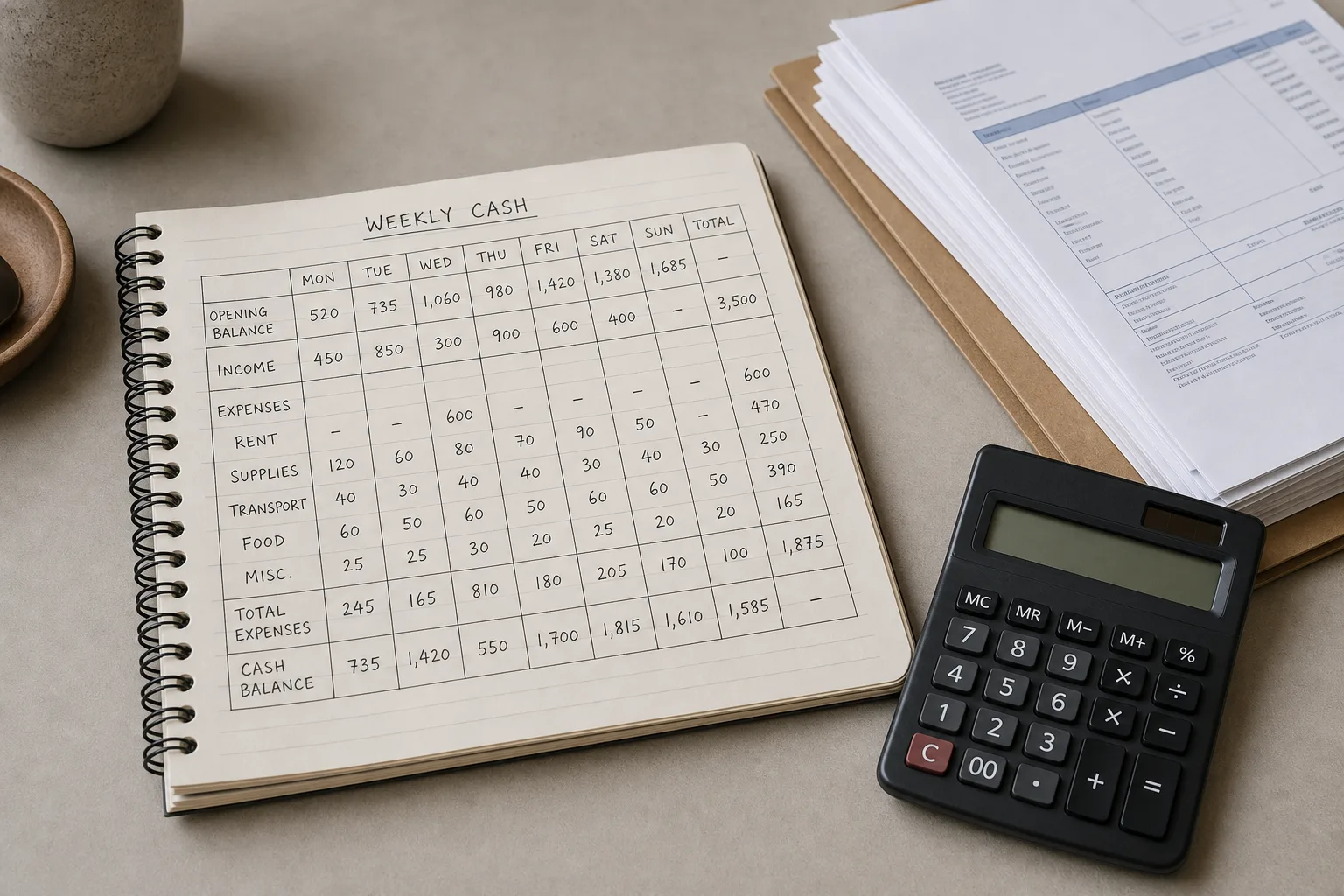
A landscaping company with four employees and a decade of steady work took on three commercial contracts in the same month, roughly doubling its usual volume. The work went well, the customers were satisfied, and the profit and loss report for May showed the best month in the company's history. On the last Friday of that month the owner could not make payroll and covered it from a personal line of credit. Nothing had gone wrong, nobody had stolen anything, and both numbers were accurate. What follows is where the gap between them came from, because it is the most common way a growing small business gets into trouble.
May on Paper
The report showed revenue of a size the company had never recorded, materials and subcontracted labor at a normal proportion of it, payroll higher than usual because of overtime and two temporary hires, and a healthy profit at the bottom. Every figure was correct under the accounting method the company used, which recognized revenue when the work was invoiced rather than when the money arrived. That distinction is the whole story, and it is invisible on the report itself, which is why an owner reading it saw a triumph rather than a warning.
May at the Bank
The bank account told a different story in the same period. Material suppliers had been paid on delivery or on thirty-day terms that fell due inside the month, equipment had been rented weekly and paid weekly, subcontractors had invoiced on completion and expected payment promptly, and payroll had gone out every fortnight without exception. Against all of that, the three commercial customers were on sixty-day terms, and two of them had internal approval processes that made sixty days optimistic. The company had spent the whole of May paying for work it would be paid for in July.
Ordinary months had concealed this for a decade because they were small enough that the timing mismatch fitted comfortably inside the cushion sitting in the account. A company spending eight thousand dollars ahead of collections and holding twenty thousand never notices the gap exists. Double the volume and the gap doubles with it, while the cushion stays exactly where it was, and the arithmetic that had been invisible for ten years becomes the only thing that matters in a single fortnight. That is why this failure tends to arrive during the best month rather than the worst one.
Where the Gap Came From, Line by Line
Three factors compounded. The first was terms: money went out in days and came in at sixty, and the larger the job the longer the terms, because bigger customers have more procurement between the work and the check. The second was the deposit structure, or rather its absence, since these contracts had been won partly by not asking for one, and a deposit is the single most effective way to fund the front end of a job. The third was that growth itself consumes cash, which is the part that feels most unfair. Every additional job requires materials and labor before it produces anything, so a company growing quickly is financing its own expansion out of working capital whether or not it has framed it that way.
Why the Profit Report Hid It
A profit and loss statement answers whether the work was worth doing, and on that question it was entirely right: the May jobs were profitable and the company was better off for having taken them. It says nothing about when the money moves, and it was never designed to. Depreciation appears as an expense with no cash attached, loan principal repayments leave the bank without appearing as an expense at all, and money tied up in unpaid invoices and unused materials sits on a different statement that many small businesses never look at. An owner monitoring only profit is monitoring one of two things that can end a company, and the other one moves faster.
The Thirteen Week View That Would Have Shown It
The tool that fits this problem is unglamorous and takes an hour to build. Set out the next thirteen weeks in columns and, for each week, write the cash expected in, based on invoices already issued and the terms actually attached to them, and the cash going out, payroll on its real dates, supplier payments, rent, loan payments, tax set aside. Carry the balance forward across the row. The week the running balance goes negative is visible weeks or months in advance, which converts an emergency into a decision.
Built in April, this company's grid would have shown the last week of May going negative before a single contract was signed, using only figures the owner already had in front of him. That is the entire value of the exercise. It is not precision, which is impossible in a business where a customer can pay a fortnight late for no reason, but enough warning to act while the cheap options are still available. A grid rebuilt once a month and glanced at weekly takes very little maintenance once the first version exists.
The options it would have opened were several, and all of them cheaper than an emergency. Ask for a deposit or a mobilization payment on contracts of that size, which large customers expect and routinely grant when asked before the price is agreed. Invoice progressively rather than at completion, so a six-week job produces money in weeks two and four. Negotiate longer terms with material suppliers to line up better with customer terms. Arrange a line of credit in advance, since a bank lends far more readily to a business showing it a forecast than to one that missed payroll last Friday. Or stagger the start dates so the three contracts do not draw from the account in the same fortnight.
Not one of those is a sophisticated financial instrument and not one of them requires an accountant. They are all decisions made when the contracts are being negotiated, which is the only point at which a small contractor has any leverage over terms, and they are all forfeited the moment a signature goes on a document that says payment on completion at sixty days. Free counseling on exactly this pattern is available through the resource partners funded by the Small Business Administration, and a growing contractor who has never sat down with one is leaving an hour of genuinely useful advice unclaimed.
The Number to Watch, and How It Resolved
The single figure worth tracking every month is cash days in hand: the balance in the account divided by average weekly outgoings, expressed in weeks. It is one division, it takes a minute, and it answers the only question that matters in a bad month, which is how long the company can operate if collections stop. Anything under a few weeks is a business one late payment away from a difficult conversation, whatever the profit report says.
Pair it with a second habit that costs nothing: read the list of unpaid invoices every Monday, sorted by age rather than by amount. An invoice at seventy days is a different object from an invoice at thirty, and the difference between a company that collects well and one that does not is almost entirely a matter of noticing on the Monday rather than at the end of the quarter. Most late payments are administrative rather than deliberate, and a polite reminder in week five is the cheapest collection activity that exists.
This company recovered. The July payments arrived, the personal line was repaid, and the following year the same owner asked for deposits on every commercial contract and built a thirteen-week grid every quarter, which took an hour and changed nothing about the work. That is the encouraging part of the story, because none of the fixes required more revenue, better customers, or any additional skill. They required knowing that profit and cash are two different measurements, and looking at both.
About the author
Corinne writes for readers doing some of the work themselves.