Built the Garden, Budgeted Nothing to Keep It? The Trade Nobody Counts Until a Limb Comes Down
Most landscape budgets stop the day the crew pulls out. The recurring cost is seasonal, and the arborist is the line item almost nobody plans for.
| Author | Corinne Adeyemi |
|---|---|
| Section | House & Home |
| Published | |
| Length | 1,234 words · 5 min |
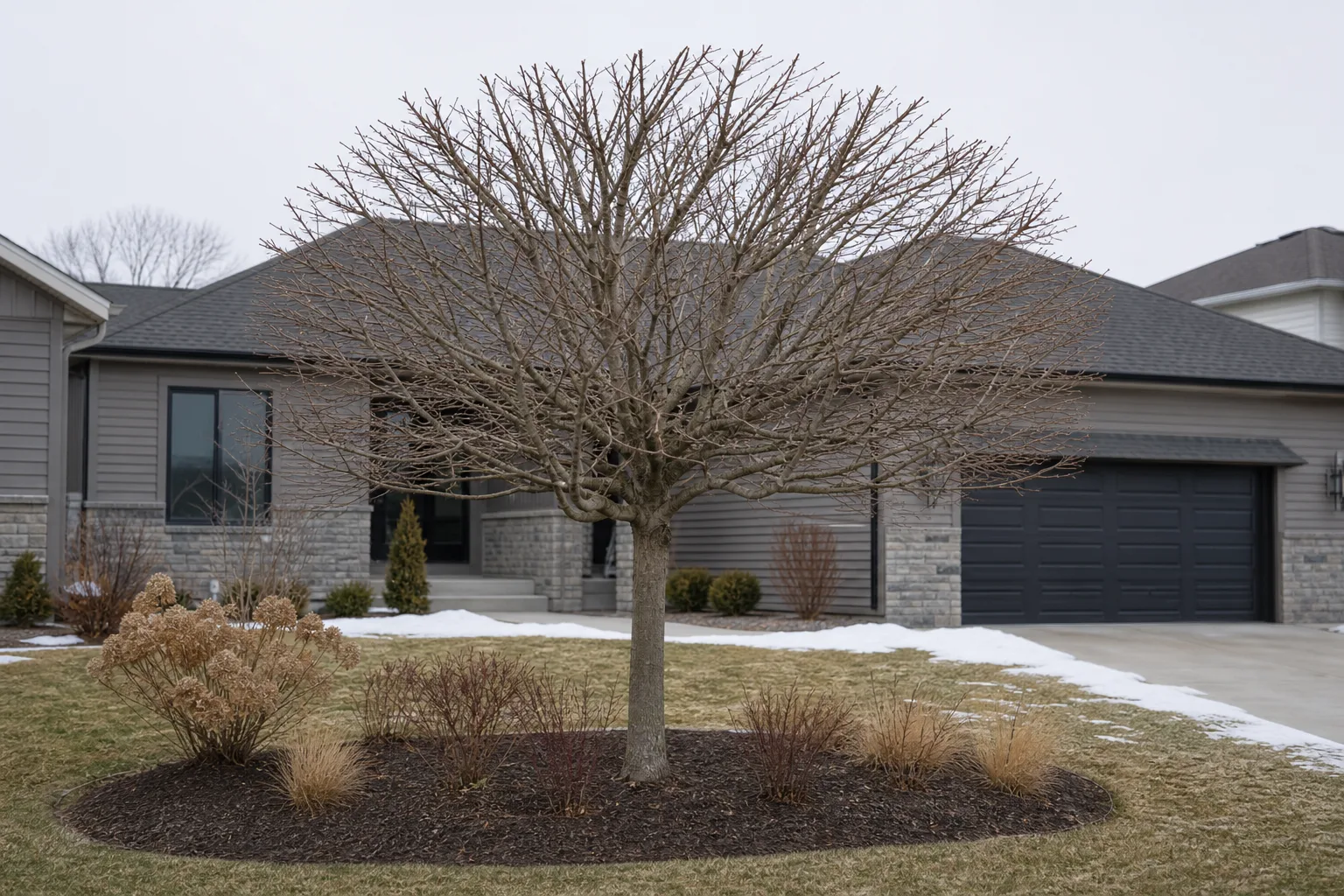
A landscape budget almost always has a finish line in it. The beds go in, the irrigation gets tested, the crew sweeps the driveway and leaves, and the homeowner files the invoices away as a completed project. That is the assumption, and it holds for about one growing season. What is actually true is that the installation was the cheap part spread over a short period, and the keeping of it is the expensive part spread over decades. The split is not close. A planting plan that cost a few thousand dollars to put in the ground will quietly ask for money every year after, and the largest single checks in that stream will not go to a mowing service or a mulch supplier. They go to a trade most people never speak to until something is already broken.
The install budget and the keeping budget are two different documents
When you price a garden build, you get a line-item estimate: plants, soil amendment, hardscape, labor, haul-away. It is bounded, it is quotable, and three companies will bid on it. The keeping budget has none of those properties. It is not one invoice, it is a dozen small ones across a year, and the amounts move depending on weather, growth rate, and whether anything went wrong. Because it never arrives as a single number, most households never add it up.
Try adding it up once. Mowing or edging if you pay for it. Irrigation startup in spring and blowout or shutdown before the first hard freeze. Mulch, which is an annual consumable and not a one-time purchase. Fertilizer and soil testing. Replacement plants, because a reasonable failure rate in the first three years is normal and not a sign anyone did anything wrong. Seasonal pruning. Leaf removal and green waste disposal, which in many cities is metered or capped. Then the structural tree work, which is the item that behaves least like the others and costs the most when it arrives unplanned.
The young trees on a new plan are the only part of a garden that gets substantially more expensive every single year it exists. Everything else holds roughly steady or declines as plants fill in and weeding drops off. A tree does the opposite. It gets taller, heavier, closer to the roof, and harder to work on, and the price of touching it rises accordingly.
The party in the transaction almost nobody plans for
Designers design, installers install, and a maintenance crew cuts, blows, and edges. None of those three are the people who will be standing in your yard the day a co-dominant stem splits. That person is an arborist, and in the ordinary sequence of events a homeowner meets one for the first time under the worst possible conditions: after hours, after a storm, with a limb across a fence line and a neighbor standing in the driveway.
Introduce that party earlier and the economics change. An arborist who looks at your trees on a scheduled visit in the dormant season is doing assessment and reduction work. The same arborist responding to a failure is doing emergency rigging, traffic control, and debris removal, and is pricing the job against overtime, risk, and a crew pulled off something else. A homeowner pricing seattle tree removal in January and the same homeowner pricing it the morning after a November windstorm are not buying the same service, and the gap between the two numbers is not a markup, it is a different job.
There is a second overlooked party behind the first. In a growing number of cities, removing a tree above a certain diameter requires a permit, an arborist's written assessment, or a replacement planting, and some species or heritage designations are protected outright. The municipal urban forestry office is a participant in your transaction whether you contact it or not. A quote that makes no mention of permitting in a regulated city is a quote from someone who has not done the job there, and that is worth more as a screening signal than any price comparison.
What each season actually asks you to pay for
Upkeep cost is not evenly distributed across twelve months, and knowing where it bunches lets you schedule rather than react.
Late fall through late winter
This is the dormant window, and it is the cheapest and safest time for most structural tree work on deciduous species. Leaves are off, the crew can see the architecture, the ground is often firmer, and demand is lower before storm season peaks. Shaping, deadwood removal, crown reduction, and clearance from the roof or the service drop all belong here. It is also the right time to pay for an assessment you do not act on immediately, because knowing you have three years before a tree needs work is how you avoid paying for it in a single emergency week.
Spring
Irrigation startup, backflow testing where it is required, mulch, and the honest accounting of winter losses. Spring is when replacement plant costs show up, and it is the one month where a little discipline saves real money: replace with what thrived, not with what the original plan specified, if the plan was wrong about that spot.
Summer
Water is the cost, and it is a utility bill, not a landscaping bill, which is exactly why people forget to count it. Summer is also when pest and disease problems become visible and when a declining tree announces itself. Note it, photograph it, and schedule the work for winter unless the arborist tells you it cannot wait.
Early fall
Leaf management, green waste, irrigation shutdown, and storm preparation. The pre-storm walk is the single highest-return hour in the maintenance year: look for limbs over the roof, over the driveway, and over the property line, and get those on the dormant-season list before the weather makes the decision for you.
Which parts you can do yourself, and the one you should not
Plenty of this is genuinely homeowner work. Mulching, hand-weeding, deadheading, small-shrub pruning, leaf collection, and irrigation shutdown are all learnable in an afternoon, and doing them yourself is the most reliable way to cut the annual number. Soil testing through a county extension service costs very little and prevents years of guessing at fertilizer.
Anything that involves a chainsaw above shoulder height, a ladder leaned against a trunk, or a limb that could fall toward a structure, a fence, a vehicle, or a utility line is not in that category. Tree care is among the more hazardous occupations in the country, and workplace safety standards covering felling, rigging, climbing, and aerial lift operation fall under the Occupational Safety and Health Administration for exactly that reason. Hire for it, confirm the company carries general liability and workers' compensation, and ask for certificates sent directly from the insurer rather than a photocopy from the truck. That one request separates serious operators from the rest faster than any other question you can ask.
The practical move is to write the keeping budget the same week you sign the install contract, with a season-by-season column and a standing line for tree work even in years you expect to spend nothing. Then book the dormant-season assessment before you need it. A garden priced that way stops producing surprises, and the trees that are its most valuable feature get treated like the long-term asset they are.
About the author
Corinne writes for readers doing some of the work themselves.