Hail Last Night? The Claim File a Property Manager Builds and You Can Copy
How large property owners document storm damage to roofs and siding, and which parts of that system a single homeowner can run alone.
| Author | Corinne Adeyemi |
|---|---|
| Section | House & Home |
| Published | |
| Length | 992 words · 4 min |
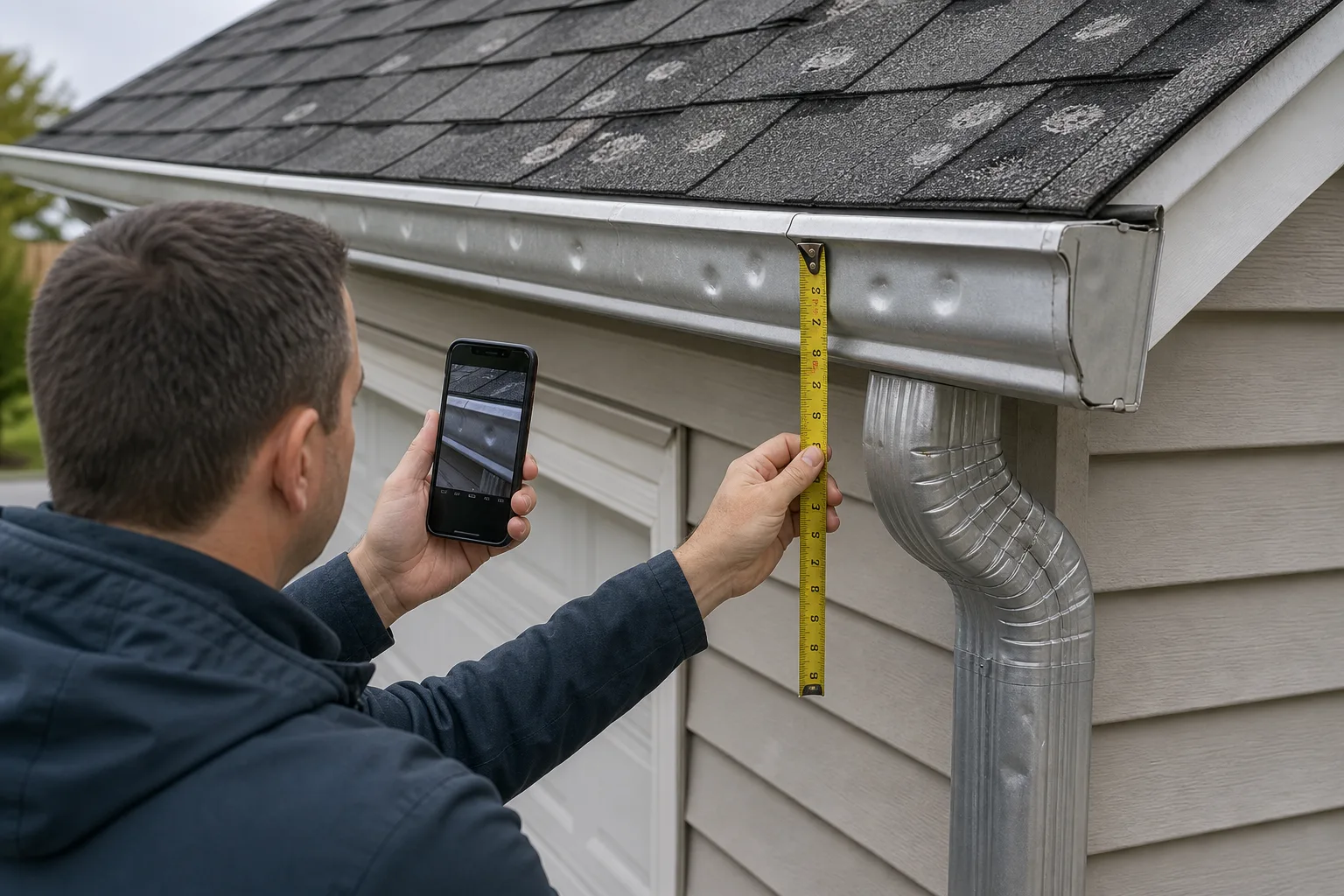
A management company holding forty buildings across three counties treats a hailstorm as a paperwork event before it is a repair event. Within a day or two, someone has pulled the date of loss, matched it against the buildings in the affected radius, opened a file per property, and dispatched an inspector with a camera and a chalk stick. None of that is sophisticated. It is just ordered, and the order is what keeps a claim from stalling. A single homeowner with one roof can run most of the same system, and the parts that require a ladder are the parts to hand off.
What the wind and the hail are actually doing up there
Wind damage on an asphalt shingle roof rarely starts in the middle of a slope. It starts at edges, ridges, and rakes, where uplift pressure is highest and where the shingle has a free corner to grab. The sealant strip under each shingle course breaks loose, the tab lifts and flexes, and the shingle either creases or tears at the nail line. A creased shingle often looks fine from the driveway and is functionally finished, because the crease is a hinge that will open every time the wind returns. That is why an inspector walks the perimeter first and why wind claims tend to turn on a handful of shingles along one exposure rather than a uniformly beaten field.
Hail does something different. It bruises. A hailstone hard enough to matter fractures the fiberglass mat under the granule surface and knocks granules loose, leaving a soft, dark, circular spot that gives slightly under a thumb. Granule loss alone can be age. A bruise with a fractured mat is impact damage, and it is the thing adjusters are trained to find and count within a marked test square. Hail also leaves a trail on softer metal: gutters, downspout faces, vent caps, the aluminum on a garage door, air conditioner fins. Those collateral hits corroborate the roof and are easy for a homeowner to photograph from the ground.
What the policy covers, and the three terms that decide the check
A standard homeowners policy pays for sudden, accidental, direct physical loss from wind and hail. It does not pay to replace a worn roof, and it does not pay for damage that accumulated over years. Three provisions do most of the work in deciding what lands in your account. The first is the wind and hail deductible, which in many storm-exposed states is a percentage of the dwelling coverage rather than a flat dollar figure, and which can be several times the deductible you apply to a kitchen fire. The second is the settlement basis. Replacement cost coverage pays the depreciated amount first and releases the held-back depreciation after the work is finished and invoiced. Actual cash value pays the depreciated figure and stops there. The third is cosmetic damage: some policies carry an endorsement excluding dents to metal that do not affect function, which matters for gutters, siding, and roof vents.
Two more items are worth knowing by name because they are frequently payable and frequently omitted from a first estimate. Ordinance and law coverage pays for code-required upgrades triggered by the repair, such as ice-and-water shield or a second layer teardown. Matching provisions govern what happens when the discontinued shingle on your south slope cannot be bought anymore. Neither gets added unless somebody asks.
The file, built the way a portfolio owner builds it
A large provider keeps the same folder for every building, and the structure is the point. Copy it.
- Baseline photos. Dated images of every elevation, the roof from a drone or a second-floor window, gutters, and the garage door, taken before any storm. This is the single highest-value thing you can do this weekend, because it converts "pre-existing" from an opinion into a comparison.
- Date of loss and weather verification. One date, used consistently on every document. The National Weather Service, part of NOAA, is the federal authority responsible for issuing and archiving severe weather warnings and local storm reports, and an adjuster will expect your date to line up with the record for your area.
- The damage log. Numbered photos, each with a location note, wide shot then close shot, with a coin or a tape measure in frame for scale on hail bruises.
- A written scope. Not a price. A list: squares of roofing, linear feet of ridge, drip edge, pipe boots, gutter runs, siding panels.
- Two contractor estimates in line-item form, plus any emergency tarping invoice.
- A contact log. Date, name, claim number, what was said, what was promised, by when.
The tools involved are modest: a phone camera, a folding rule or tape, chalk, a cheap moisture meter for interior ceilings, and a cloud folder shared with your spouse so nothing lives on one device.
The part to hand off
Do not get on the roof. Storm-loosened shingles are slick, the fasteners you would step near are the ones already compromised, and a fall costs more than the claim. Portfolio owners do not send an office manager up a ladder either; they send a licensed, insured inspector who carries workers' compensation coverage, and they ask for the certificate before the truck arrives. Ask for the same. Have the inspector mark test squares, photograph them, and give you the count of impacts per square, because that number is what the adjuster will reach for. Then be present at the adjuster's inspection with your file printed, and let the two of them compare scopes on the ground while you take notes.
The difference between a claim that settles in four weeks and one that grinds through three supplements is almost never the severity of the storm. It is whether one person kept a dated, consistent, line-item record from the first morning. That person can be you, working from the same folder structure a company with forty roofs uses, minus the ladder.
About the author
Corinne writes for readers doing some of the work themselves.