Planted and Paid For? Five Checks on What a Garden Costs to Keep
The install invoice is the small number. Here are five rules and standards that quietly set what a planted yard costs you every week after that.
| Author | Corinne Adeyemi |
|---|---|
| Section | House & Home |
| Published | |
| Length | 1,264 words · 5 min |
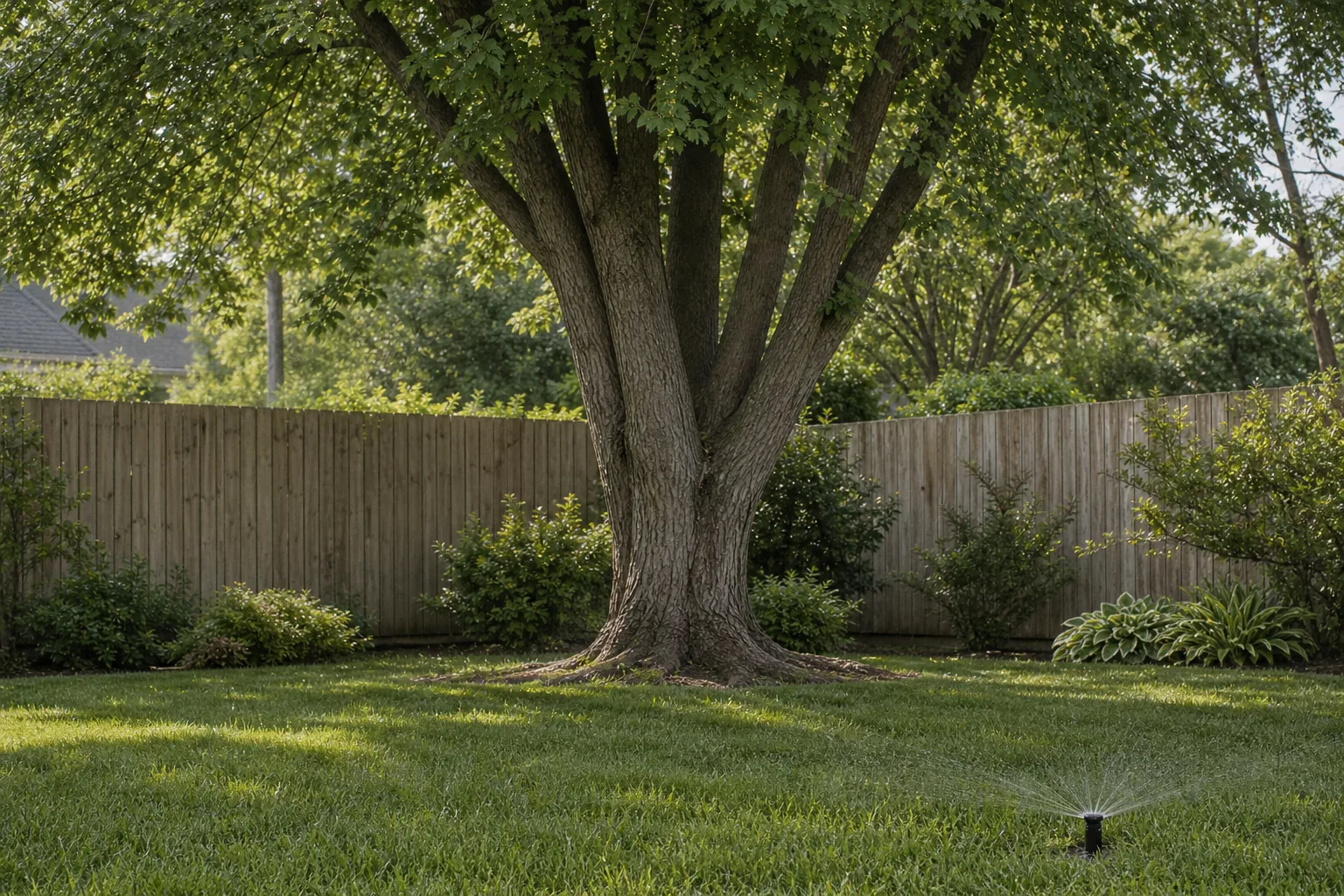
The landscape invoice is a single number with a date on it. Everything after that is a running cost, and it is the running cost that decides whether the yard you paid for in May still looks like that yard in four years. Most of the week-to-week spend is not mysterious. It is mowing, watering, pruning, mulch, and the occasional larger job that arrives whether you budgeted for it or not. What surprises people is how much of that spend is shaped by rules they did not read: a municipal tree ordinance, a state licensing requirement for the person spraying their lawn, a water utility's seasonal schedule, a covenant recorded against the lot. These are not obstacles so much as the frame the budget sits inside. Knowing them early moves money from the emergency column into the planned column.
1. Find out which trees on your lot you are not free to remove
A mature tree is the single largest swing factor in what a garden costs to keep. It is also the item most likely to be regulated. Many cities, particularly in the Pacific Northwest and across the West Coast, maintain tree protection ordinances that distinguish between an ordinary tree, a tree above a certain trunk diameter, and a designated heritage or exceptional specimen. Removing one in the first category may need nothing. Removing one in the third can require an application, an arborist's written report, a posted notice period, and in some jurisdictions a replanting obligation measured in caliper inches you have to put back on the property.
Check this before the tree is a problem, not after a windstorm has put half of it on your fence. The relevant office is usually planning, urban forestry, or development services, and the lookup is often a parcel map with tree layers on it. Write down the diameter threshold, whether your lot sits in a critical area or steep slope overlay, and whether hazard removals have a separate expedited path. That last one matters: a dangerous tree is frequently treated differently from a tree you simply want gone, and the evidence standard is a report from a certified arborist. Firms that handle seattle tree removal deal with that permitting layer constantly, and a company that cannot tell you plainly which category your tree falls into is a company that has not looked.
The week-to-week consequence is simpler than the paperwork suggests. A protected tree is a tree you will maintain rather than remove, which means a pruning cycle every few years, periodic deadwood clearing, and leaf or needle litter you handle every fall. Budget for the maintenance you are legally committed to, not for the removal you may not be allowed to do.
2. Confirm the person applying chemicals to your yard is licensed to do it
Fertilizer, broadleaf herbicide, grub control, and anything described as a "treatment program" sit under pesticide law. The Environmental Protection Agency is responsible for registering pesticide products and approving their labels, and states run the applicator licensing on top of that. A commercial applicator working on your property for hire generally needs a state license in the appropriate category, and the company itself typically needs to be registered and carry a specific form of liability coverage.
This is a two-minute check with real money attached. Ask for the license number and the category, then verify it with your state department of agriculture, which usually publishes a searchable list. An unlicensed applicator is cheaper per visit for an obvious reason, and the exposure lands on you if something drifts onto a neighbor's vegetable bed or kills a strip of their hedge. On the ordinary week, the licensed outfit leaves a service record showing the product, the rate, and the date. Keep those. If a plant fails six months later, that record is the difference between a claim and a shrug.
3. Read your water utility's rules before you size the irrigation bill
Irrigation is the most reliably underestimated line in a maintenance budget, partly because the cost is seasonal and partly because the rules change. Utilities commonly use tiered rates, so the marginal gallon in August costs more than the marginal gallon in April. Many also impose watering day restrictions, time-of-day windows, or drought stages that tighten as a season goes on.
- Rate structure. Find the tier breakpoints and where a typical summer month lands you.
- Separate irrigation meter. In some service areas this removes sewer charges from outdoor use and pays for itself; in others it adds a monthly base fee that does not.
- Backflow testing. Most jurisdictions require an annual test of the backflow preventer on an irrigation system, performed by a certified tester. It is a small recurring cost that arrives by mail and is not optional.
- Rebates. Controller upgrades, rotary nozzles, and turf conversion programs are often funded by the utility itself.
The practical weekly reality is that a controller left on its factory schedule will overwater for most of the year. Adjusting it monthly is a five-minute job a homeowner can absolutely do. Repairing a cracked valve manifold or re-routing a zone is not, and is worth paying for rather than digging up on a Saturday.
4. Pull the covenants and the easements that run with your lot
If your property is in a homeowners association, the recorded covenants and the design guidelines control more of your garden than the city does. Approved plant lists, fence heights, turf percentages, visible hardscape, and who maintains the strip between sidewalk and curb are all commonly specified. Some associations assume maintenance of front yards and bill it through dues, which changes your number dramatically in both directions. Get the current guidelines, not the version the seller handed over at closing.
Easements are the quieter item. A utility easement across the back of a lot means a crew may enter to work on a line, and anything you planted in that corridor is yours to lose. Drainage easements restrict regrading. Your title policy and the recorded plat will show them. Checking once, early, prevents the specific and expensive mistake of installing a raised bed and a specimen tree directly over a sewer lateral.
5. Ask how your insurance treats trees, fences, and hired crews
A standard homeowners policy generally covers damage a falling tree does to a covered structure, with a separate and much smaller sublimit for debris removal and for replacing the tree itself. A healthy tree that falls on nothing but lawn is usually your cost to clear. A tree that was visibly dead or diseased before it fell is where negligence arguments start, and documented pruning records are what close them.
The second half of this check concerns the people working on your property. Ask any crew for a certificate of insurance listing general liability and workers' compensation, and ask that it be sent by their carrier or agent rather than printed from a folder in the truck. Tree work in particular involves height, saws, and rigging, and an uninsured climber injured in your yard becomes your problem quickly. Routine mowing carries less risk, but the paperwork costs you nothing to request.
Run these five checks once and the maintenance budget stops being a guess. You will know which trees you are keeping on purpose, who is legally allowed to spray what, how the water bill behaves in August, what the covenants require of your front yard, and who carries the risk when someone is twenty feet up in your canopy. Most weeks after that are mowing, a controller adjustment, and a bag of mulch.
About the author
Corinne writes for readers doing some of the work themselves.