Does Your Return Need a Paid Preparer or Would Cheap Software Do It Equally Well?
The honest test is not how complicated your finances feel. It is how many forms the return needs and how many of them involve a judgment call.
| Author | Junko Halloran |
|---|---|
| Section | Financial |
| Published | |
| Length | 986 words · 4 min |
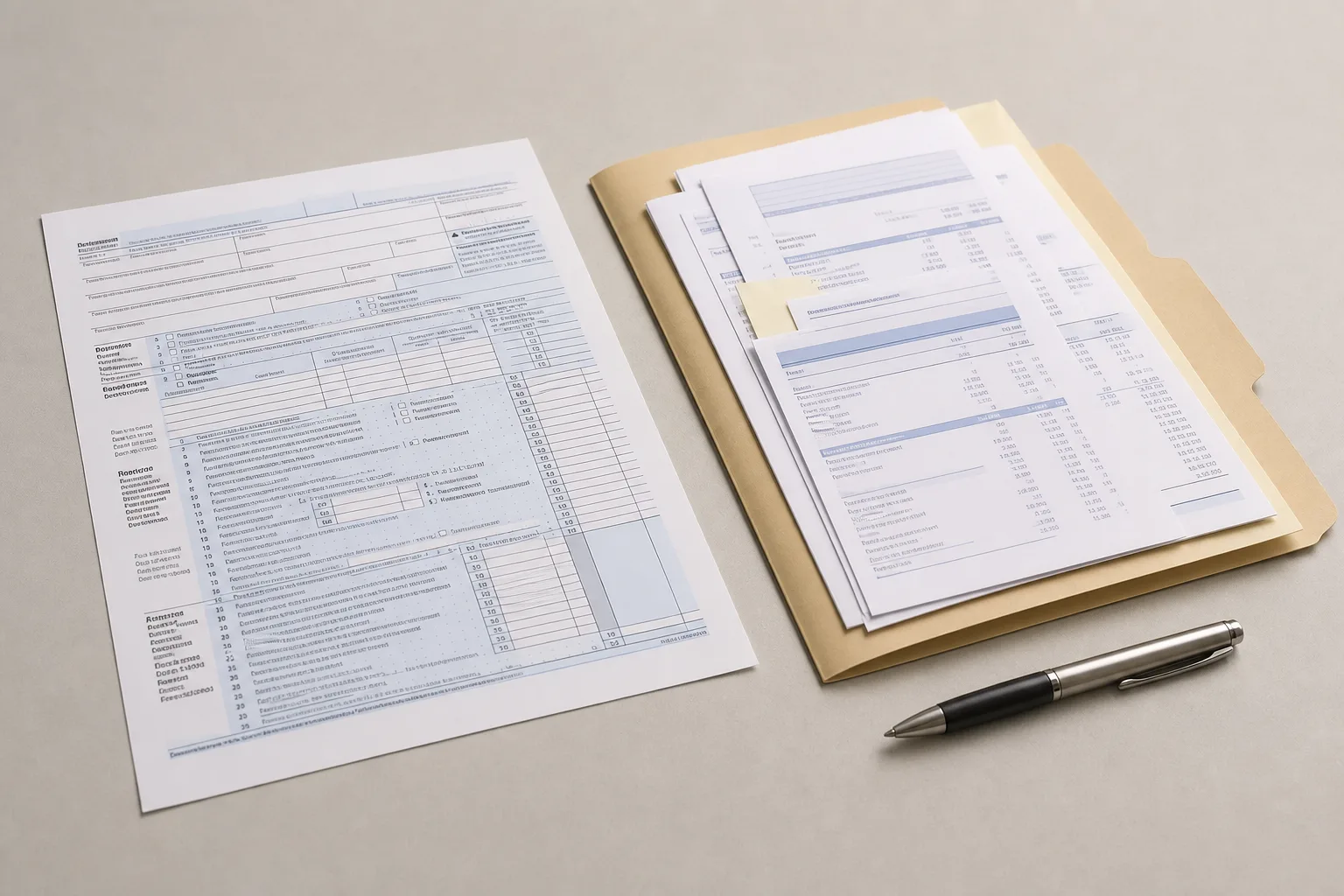
Ask a preparer who spends February doing returns which clients genuinely needed to be there, and the answer divides the waiting room in two. A good share could have filed themselves in an hour with inexpensive software and got the same result. Another share arrived carrying a question that software cannot answer, usually without knowing they were carrying it. The difference between the two groups is not income, and it is not how complicated somebody's life feels to them. It is a countable property of the return itself, and anybody can count it in twenty minutes on a Saturday.
Count the Forms the Return Actually Needs
Start by listing every document that will feed the return: wage statements, interest and dividend forms, brokerage statements, retirement distributions, health insurance marketplace forms, anything reporting self-employment income, and any state equivalents. Then list the schedules those documents force. A return built from one wage statement, some bank interest and a standard deduction is a short document that software handles perfectly well. A return carrying a business schedule, rental property, investment sales with a cost basis somebody has to establish, or income earned in more than one state is a longer document with more places to go wrong. The count itself is the first half of the answer.
Mark Every Line Where Somebody Has to Decide Something
The second half matters more. Go through the list and mark anything that is not simply a number copied from a form: whether a vehicle is better treated by mileage or actual expenses, whether a piece of equipment should be deducted now or over several years, how much of a house counts as an office, whether somebody qualifies as a dependent in a year of divided custody, what the basis is in shares inherited a decade ago. Software will ask about all of these and will accept whatever you tell it. That is the crucial point. The program is not wrong, it is simply not the one making the decision, and a return with four judgment lines in it is a return where the decisions are worth more than the data entry.
Price Both Routes Honestly, Including the Parts People Forget
Consumer software is cheap at the base tier and considerably less cheap once a business schedule, a state return, or investment reporting is added, so price the version you would actually need rather than the advertised one. Preparers vary widely and most will quote in advance if asked with a list of forms in hand. Put your own hours into the comparison as well, valued at whatever your time is worth, because a self-prepared return with a business schedule is not a one-evening job the first year you do it. A preparer costing a few hundred dollars who finds one deduction you were unaware of has paid for themselves, and so has software costing sixty dollars on a return with nothing to find.
Timing affects the quote as well, and the effect is larger than most people expect. A preparer contacted in early February has room to ask questions and to explain what they are doing, while the same preparer in the last fortnight before a deadline is triaging, and some will simply file an extension rather than rush. If the intention is to use somebody this year, the call belongs in January.
What Happens After Filing, Which Is the Part Nobody Prices
Filing is not the end of the relationship with a return, and this is where the two routes diverge most sharply. A letter arriving in September asking about one line is routine and usually resolved with a short reply and a document, but it is a great deal easier when somebody who has seen a thousand of them reads it first. Ask any preparer you are considering what their policy is on correspondence: some include a reasonable amount of follow-up in the fee, some bill it separately, and knowing which before you engage prevents an unwelcome invoice. Software companies offer varying levels of assistance here too, and the difference between the tiers is mostly this.
Check Who Is Actually Preparing It
Anybody paid to prepare a federal return must hold a preparer identification number issued by the Internal Revenue Service, must sign the return, and must give you a copy, and the searchable directory of credentialed preparers is public, so ten minutes of checking is available to anybody who wants it. Two warning signs are worth naming plainly. A preparer who quotes a fee as a share of the refund has an interest in the size of the refund, and a preparer who promises a number before seeing your documents is promising something they cannot know. Neither is subtle, and both are common enough in February to be worth watching for.
What Each Route Is Genuinely Good At
Software is excellent at arithmetic, at carrying figures between forms without transcription errors, at handling the mechanics of a state return alongside a federal one, and at doing all of that for very little money on a Sunday afternoon. It is not good at telling you which of two lawful treatments suits your circumstances, at spotting that a question you did not ask should have been asked, or at planning anything about next year. A preparer is good at exactly those things, and mediocre value if all you are buying is typing.
Which makes the decision less binary than it looks. A perfectly reasonable pattern is to use a preparer in the year something changes, a business started, a house sold, a state line crossed, and to file with software in the settled years that follow, having learned how that year's return was built. The two groups in the waiting room are not two kinds of people. They are the same people in different years, and the useful skill is recognizing which year you are in before February gets busy.
About the author
Junko covers what work costs and why two quotes for the same job differ.