Dwell Time Cleans a House in Spring and Pressure Mostly Just Removes the Paint
A pressure washer will clean siding and it will also drive water behind it, cut into soft wood, and take a coat of paint with it. Pressure is the smallest part.
| Author | Wesley Tarbox |
|---|---|
| Section | House & Home |
| Published | |
| Length | 907 words · 4 min |
The common assumption about washing a house is that the machine does the work and that more pressure means a cleaner wall. Anybody who has repaired the results knows the reverse is closer to the truth. Pressure removes material, and siding, mortar, window seals and paint are all material. What actually lifts the gray film off a north-facing wall is a cleaning solution given time to work, applied at a pressure closer to a garden hose than to anything a rental counter would call powerful. Getting that order right is the difference between a house that looks new in April and a repair bill in June.
What Is Actually Growing on the Wall
The dark film on a shaded wall is usually not dirt. It is a mix of algae, mildew and lichen that has colonized a surface staying damp longer than the sunny sides of the house, which is why the north and east elevations look worse and why the problem returns on a schedule. Understanding that changes the approach entirely: living growth is killed chemically and rinsed away, while dirt is scrubbed off. A household bleach solution or a purpose-made siding cleaner does the killing, and the rinse afterward is only there to carry away what is already dead. Blasting living growth off with pressure removes the visible layer and leaves the roots, which is why some walls look clean in May and gray again by August.
Dwell Time, Which Is the Whole Job
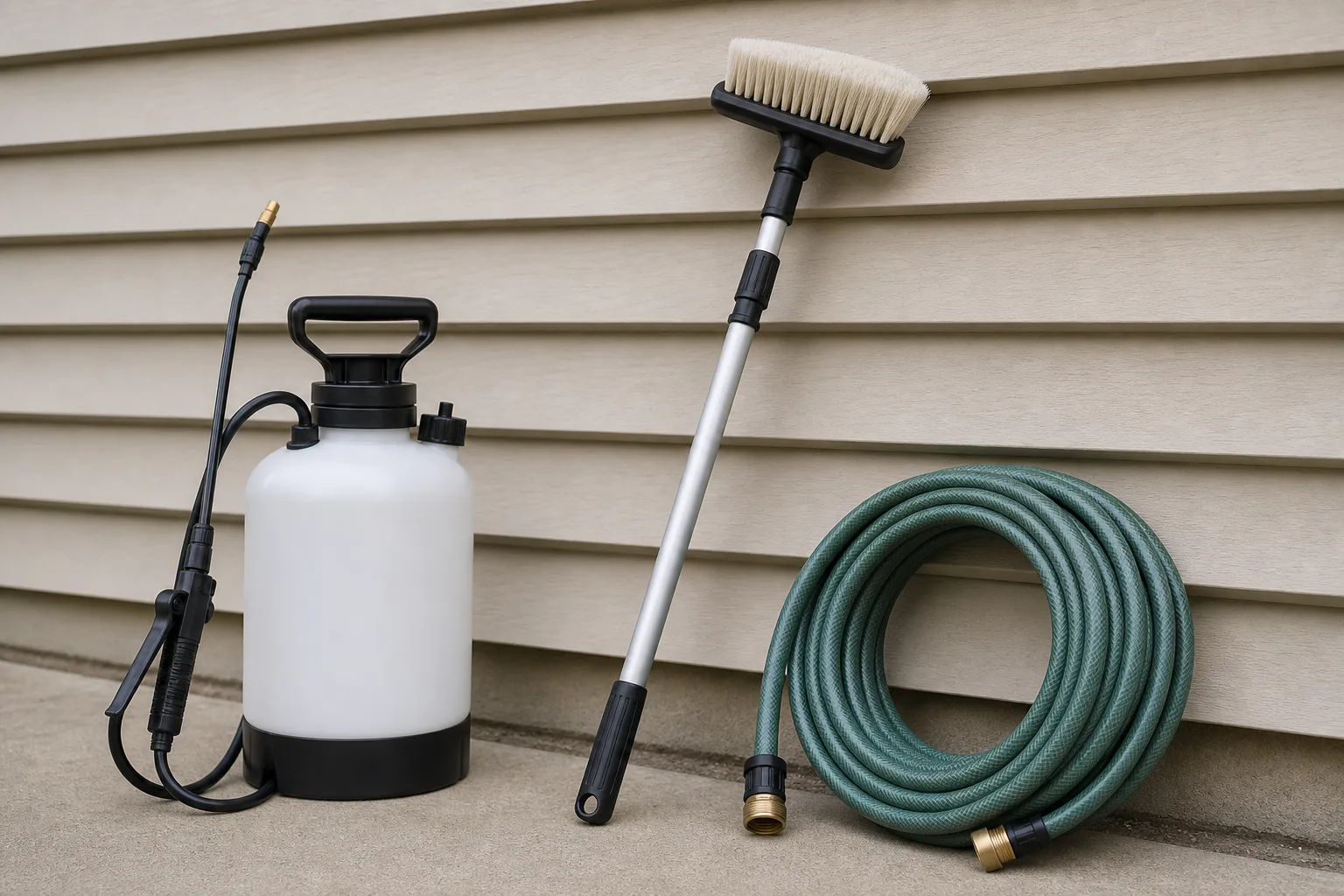
Apply the solution from the bottom of a wall upward, which prevents clean streaks running down dirty siding and setting there, then let it sit for the time the product specifies, generally several minutes, keeping the surface wet the entire time. A solution that dries has stopped working and may leave its own marks. This is the step people skip because standing still feels like doing nothing, and it is the step that determines the result. Rinse from the top down at low pressure once the dwell is finished. A pump sprayer and a soft brush on an extension pole will clean most single-story houses without a pressure washer entering the picture at all.
Protect What Will Be Damaged Before You Start
Cleaning solutions strong enough to kill algae are strong enough to burn foliage, so wet down every plant near the house before you begin, cover the ones directly beneath the work, and rinse everything again afterward. Close windows, and check the ones that only look closed. Cover exterior outlets and light fixtures. Move furniture and grills away from the wall rather than working around them. None of this is interesting and all of it takes about twenty minutes, which is considerably less than replacing a row of shrubs that were under the eave when the solution came down.
Direction, and the Surfaces That Should Never See a Washer
Lap siding overlaps downward for a reason, and water directed upward under a lap goes behind the cladding into the wall assembly, where it has no route out. Spray downward or straight on, never up, and keep the wand moving and well back from the surface. Some surfaces are simply off the list: old mortar joints, which a washer will excavate, wood that has gone soft, painted surfaces already showing any peeling, window and door seals, and anything with an opening in it such as a dryer vent or a soffit vent. Cedar, stucco and painted trim all need a gentler treatment than vinyl, and treating a whole house as one surface is how a single afternoon damages three of them.
Roof surfaces belong in a category of their own and belong to somebody else. Asphalt shingles lose their granules to pressure, which shortens the life of the roof measurably in exchange for a cosmetic improvement, and the streaking most homeowners want removed is algae that responds to a chemical treatment applied from a safe position rather than to a wand. Contractors who do this work regularly know how to keep the solution off the plantings below and how to flush the gutters afterward, and they are working from a ladder or a lift rather than from the roof itself. It is one of the few exterior jobs where hiring is cheaper than doing.
Where the Line Falls Between Doing It and Hiring It
Single-story vinyl or fiber cement with reachable walls is a reasonable weekend job for somebody willing to buy a pump sprayer and be patient about dwell time. Two stories change the calculation, because everything above the reach of a pole means either a ladder held at an angle while managing a hose, or a wand aimed upward from the ground, and both of those are how the two classic failures happen. Historic masonry, stucco in poor condition, and any wall with paint that is already lifting are worth a professional opinion before anybody applies anything.
The reassuring part is that the gentle method is also the effective one, which is not always how maintenance works. A sprayer, a soft brush, the right solution and the patience to let it sit will clean a house better than a rented machine used aggressively, and it will do it without opening a wall to water or taking a layer of paint off a south elevation. The machine is the least important thing on the list, and the wall will look the way it did the year the house was painted.
About the author
Wesley writes about timing, and why the same job costs differently in March.