Buying in San Antonio? What the Survey Decides That the Inspection Never Touches
A boundary survey and a home inspection answer different questions. Here is how the three survey routes compare, what each protects, and who reviews the drawing before closing.
| Author | Junko Halloran |
|---|---|
| Section | House & Home |
| Published | |
| Length | 1,094 words · 5 min |
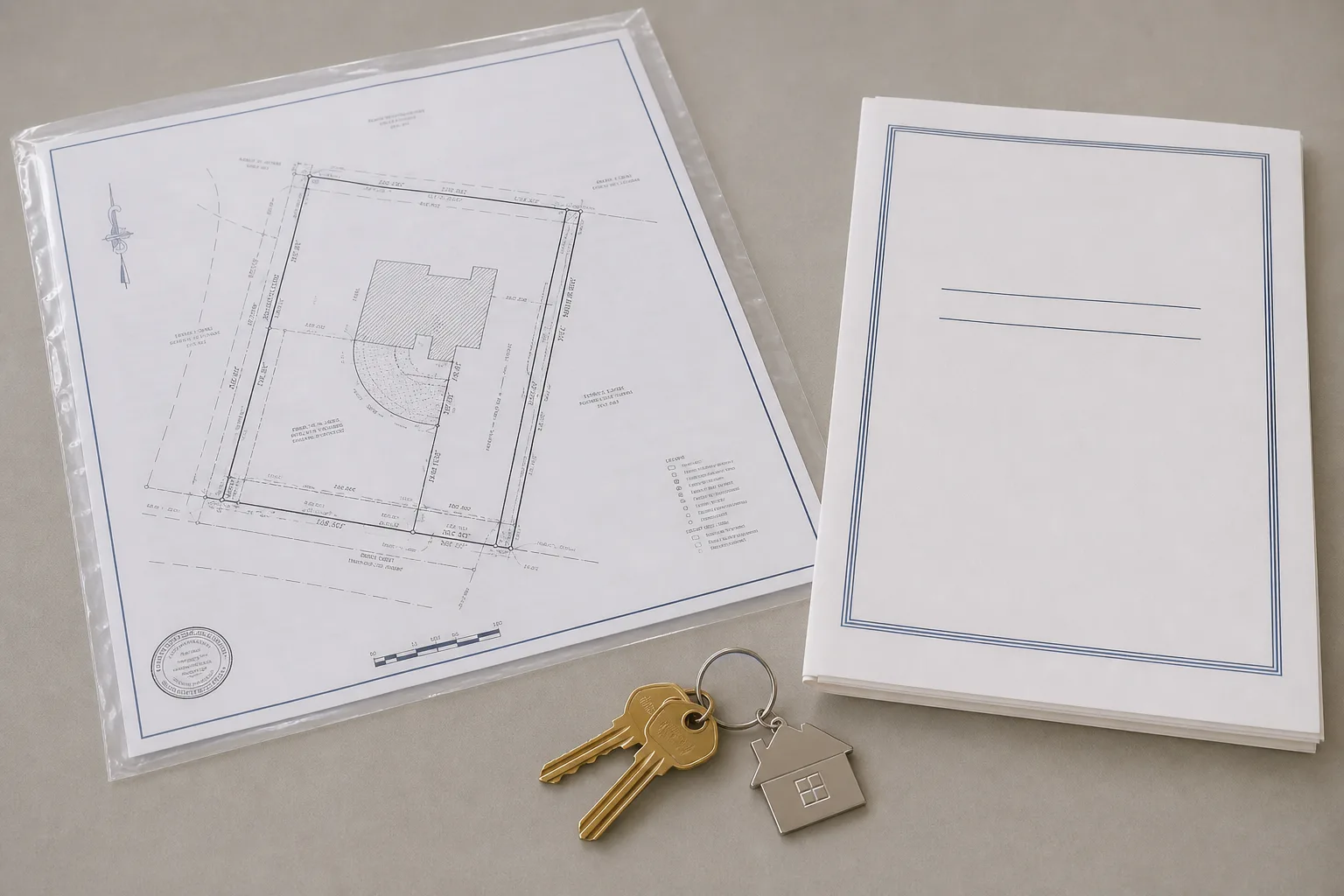
Two documents arrive in the same week of a typical residential purchase, and buyers routinely confuse them. One is the inspection report: a few dozen pages on the condition of the roof, the panel, the water heater, the grading. The other is a single sheet of paper with a drawing on it, a surveyor's seal, and a list of numbers running around the edges. The inspection tells you what will cost money to fix. The survey tells you what you are actually buying, where it stops, and who else is entitled to walk across it. They do not overlap at any point.
That distinction matters most in a metro like San Antonio, where a lot bought in 1978 may sit inside a subdivision that has since been re-platted, where utility easements were dedicated decades before the current fence went in, and where drainage easements along creek corridors can quietly consume a chunk of a back yard. None of that shows up in a condition report. All of it shows up on a survey, and the title company reads the survey, not the inspection, when it decides what coverage it is prepared to write.
What the drawing is for, and what it is not for
A land survey is a measured legal opinion. The surveyor locates the property corners described in the deed, puts the improvements on the ground in relation to those corners, and shows the recorded easements that affect the tract. The output answers four questions. Where are the boundaries. Do the improvements sit inside them. Who has a recorded right to cross or occupy part of the land. Is the tract in a mapped flood hazard area.
Those answers exist to protect against a specific set of losses: a neighbor's driveway sitting two feet inside your line, a carport built over a utility easement that the utility can later require you to remove, a pool deck that crosses into a drainage easement, a fence that has stood in the wrong place long enough to raise an adverse possession question. Each of those is expensive and slow to cure after closing. Each is cheap to identify before it.
In Texas, residential boundary work is commonly delivered to the Category 1A standard, a form adopted by the state's professional surveying association and understood by every title underwriter operating here. Category 1A is a land title survey: it is prepared against a current title commitment, so the easements listed in Schedule B of that commitment get plotted or noted, and the surveyor states which ones could not be located. That link between the drawing and the title commitment is the whole point. A drawing produced without a title commitment in hand is a measurement, not a title survey.
Three routes, and what separates them
The first route is the existing survey. If the seller has a prior survey and the improvements have not changed, the buyer, seller and title company can work from it, supported by a sworn affidavit from the seller (the form is widely called a T-47) confirming no new construction, no boundary changes, no new easements. The title company decides whether to accept it. That decision is discretionary, and a larger underwriter with a standing internal review desk will often accept an older drawing that a small independent agent would rather not touch, because the larger organization is absorbing the risk across a national book rather than a single file.
The second route is a new Category 1A. The surveyor goes to the site, recovers or sets corners, and produces a current drawing tied to the current commitment. This is the default when there is no prior survey, when the affidavit cannot honestly be signed, or when a pool, addition, shed or fence has gone in since the last one.
The third route is an ALTA/NSPS Land Title Survey, prepared under the Minimum Standard Detail Requirements jointly adopted by the American Land Title Association and the National Society of Professional Surveyors. It is the commercial standard, with an optional table of extra items the client can request. Residential buyers rarely need it. Buyers of a fourplex, a small apartment property, or a house on an unplatted acreage tract with an institutional lender behind them sometimes do, because the lender's own requirements are written in ALTA terms.
What the larger provider changes
The practical differences between a two-person survey firm and a regional company with multiple crews are turnaround, coverage and continuity. A larger firm can usually schedule field work inside a contract option period, carries professional liability coverage at limits an underwriter recognizes, and keeps archived field notes, which matters when you or a future buyer needs an update years later rather than a fresh survey. Larger title companies, for their part, run centralized survey review, which produces more consistent answers on whether an existing drawing is acceptable.
The same consolidation appears on the sell side. A seller dealing with institutional house buyers in san antonio will often find the survey question handled as a standing procedure rather than a negotiation, because the buyer closes enough transactions to have a fixed policy on when it orders new work.
Cost, and the line it sits on
Survey pricing is quoted per job, driven by lot size, terrain, vegetation, how much record research is needed, and whether corners have to be reset. A platted subdivision lot with clean corners sits at the low end. An unplatted acreage tract with a metes and bounds description and no recovered monuments can run several times that, and no honest quote exists before the surveyor pulls the deed and the plat. Anyone who gives you a firm number for an acreage tract over the phone is guessing.
The offsetting benefit is concrete. Title policies in Texas contain a standard exception for matters a survey would show. With an acceptable survey and the required affidavit, that exception can be amended so the policy covers boundary and encroachment matters, for a premium add-on set under the state's promulgated rate rules rather than by the agent. Both the survey fee and that add-on appear as itemized lines on the Closing Disclosure, the standardized form overseen by the Consumer Financial Protection Bureau, so you can see exactly what each one cost before you sign.
The decision, then, is narrower than it first looks. You are choosing between a document the seller already paid for and one you pay for now, and the question is only whether the older one still describes the ground accurately enough for an underwriter to stand behind it.
About the author
Junko covers what work costs and why two quotes for the same job differ.